blog post
Bringing Awadhi Craft Into a Modern Lucknow Home
Lucknow's craft was never meant to be background decoration. Zardozi, the word itself, means "sewing with gold string" in Persian, and it flourished under Nawab Wajid Ali Shah in the middle of the nineteenth century. This is slow, patient work, and a home should treat it that way.
Families renovating in the city often ask a simple question when they start looking for an interior design company in Lucknow. How do we bring all this into a modern home without it feeling like a museum? Here is how we think about it at Interia, over a cup of chai.
Start With the Craft, Not the Ornament
Before choosing anything, learn what you are working with.
- Chikankari, the delicate white-on-white embroidery Lucknow is known for.
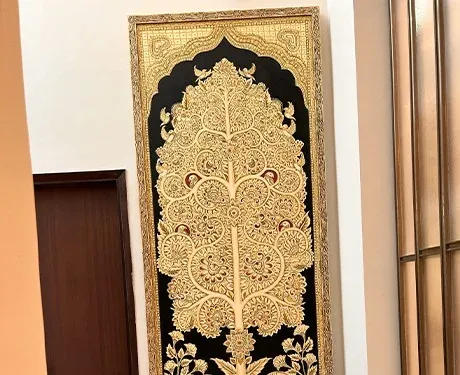
- Zardozi and aari work, metallic thread embroidery done on a stretched frame.
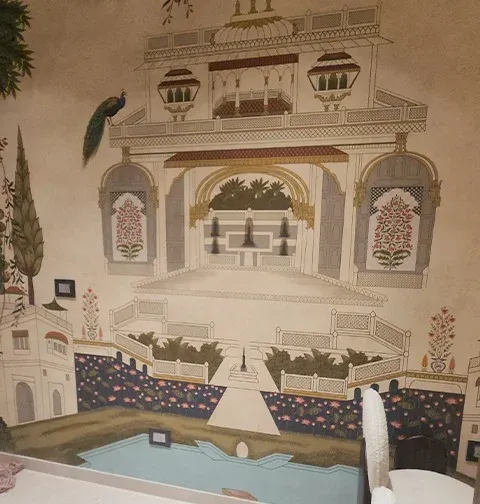
- Awadhi architecture, with its arches, jaali screens and the paired fish motif linked with the nawabs.
Each has its own rhythm. Chikankari is quiet and airy. Zardozi is rich and glittering. Mixing them in one room usually ends badly, so pick one lead voice.
It also helps to visit a workshop before finalising anything. Watching a piece being made, thread by thread, changes how you value it, and how you place it.
Let Textiles Do the Gentle Work
The easiest entry point is soft furnishings. Chikankari curtain sheers filter daylight beautifully. A zardozi panel on a headboard or the edge of a cushion adds warmth without shouting.
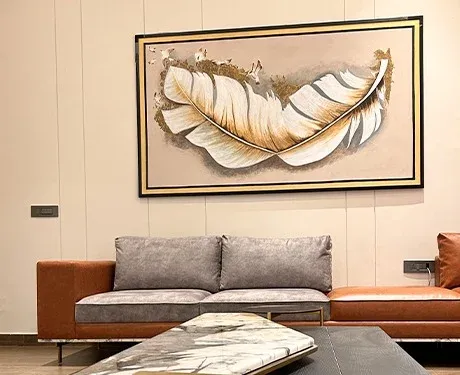
One statement piece per room is plenty. Everything else should stay calm and plain, so the craft gets room to breathe.
Borrow From Awadhi Architecture
You do not need a palace. A few borrowed ideas go a long way.
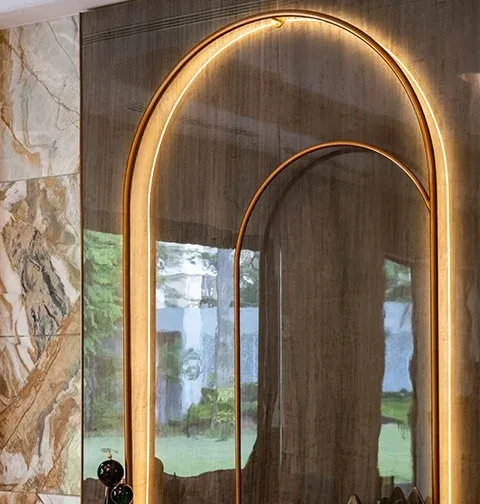
- An arched niche for a lamp or sculpture.
- A jaali screen between the living and dining areas, which divides space and still lets light pass.
- Warm whites, muted gold and deep green, which sit well against polished stone.
These details read as Lucknow without pointing at themselves.
A Room-by-Room Starting Point
If you are not sure where to begin, this is a gentle way in.
- Entrance: a brass detail or a fish motif on the door, so guests know where they are.
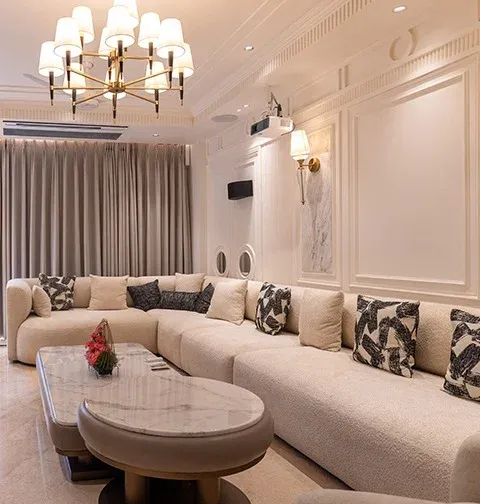
- Living room: chikankari sheers and one arched niche for a lamp.
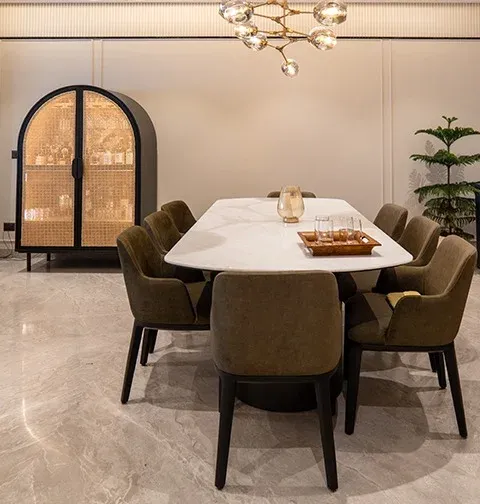
- Dining area: a jaali screen that lets light and air pass through.
- Bedroom: a zardozi headboard panel, with everything else kept plain and soft.
Lucknow summers are hot, so jaali and sheer layers are not just pretty. They help a room breathe, which is the oldest design logic there is.
Keep the Rest of the Home Modern
This is where many projects go wrong. Heritage should not slow down daily life. We plan the following first and add craft afterwards:
- Proper storage and concealed services.
- Comfortable seating with modern ergonomics.
- Layered lighting that works for both evenings and reading.
- Clean, simple surfaces around the craft pieces.
The result feels like a contemporary home with a deep memory, not a theme.
Working With Artisans, Properly
Handwork takes time, so commission early. A zardozi panel can take weeks. Agree on drawings and samples first, and pay artisans fairly. At Interia, we settle both with the artisans before a single stitch is made, and we are happy to visit the workshop with you. Many craftspeople earn modest piece rates, and the quality you see is only possible when that work is respected.
From Lucknow to Agra, Craft Travels
Whether you start by looking for an interior designer in Agra or for top interior designers in Lucknow, the principle is the same. Agra has its own tradition of marble inlay, Lucknow has its threadwork, and both can sit beautifully in a modern interior when they are used with restraint.
A good studio will treat these crafts as materials, selected with the same care as stone or timber.
Choosing an Interior Design Company in Lucknow for a Craft-Led Home
Interia designs luxury residential interiors from Gurgaon and works with families across North India. The advantage of our in-house manufacturing facility is simple. We can build the quiet structure around the craft: a joinery panel framed to hold a zardozi insert, a headboard made to take hand-embroidered fabric, a console sized for a brass piece you already own.
Furniture is made in one place under one team, then installed with care. That single-point accountability matters even more when the craft is irreplaceable.
Making It Yours
The best homes tell the truth about who lives in them. If your family has roots in Awadh, let that show with confidence and restraint. If you simply love the craft, let it enter slowly, one considered piece at a time.
When you are choosing an interior design company in Lucknow, or a studio from outside the city, ask how they work with artisans. Ask who builds the furniture.The Interia would be glad to talk it through with you.
frequently asked questions
Yes. Use it in small, deliberate doses against clean, modern surfaces, with one statement piece per room.
Sheer curtains, cushion covers, lampshades and table linen are easy places to begin.
Handwork takes time, so it costs more than machine-made alternatives. Fair pay for artisans is part of that cost, and it is worth paying.
Right after the design direction is fixed, because hand embroidery can take weeks.
It can, with clear drawings, regular site coordination and a single team accountable for execution. Ask any studio how they manage this.