blog post
Pooja Room Decor Ideas for Navratri in Luxury Villas and Independent Homes
Navratri brings nine nights of prayer, music and light into every home. The pooja room quietly becomes the heart of the house. Families clean it, decorate it and gather there each evening. With a little planning, this small space can feel calm, festive and deeply personal.
In luxury residential interiors, the pooja room is often one of the most personal spaces to design. This guide looks at it the way a designer would. It covers how the room should work, how to decorate it for the festival, and how to plan for villas and independent homes.
Why the Pooja Room Works Harder During Navratri
Navratri means "nine nights," and over these nights the Goddess is honoured through prayer, song and beautifully decorated images. Customs change from region to region, but most homes share one rhythm. The mandir is used every morning and evening, often by more people than usual. Designers working on luxury residential interiors often plan it with the same care as a kitchen, because both are working rooms. It must handle diyas, flowers, offerings and guests. It must still look serene on the last night.
Start With What the Space Needs to Do
A pooja room serves rituals first and decoration second. Before choosing finishes, think about how your family actually prays.
- Decide where people will sit or stand during aarti. A family of six needs far more clear floor space than one person lighting a diya each morning.
- Fix a permanent spot for diyas and the akhand jyoti. It should rest on stone or brass, well away from curtains, wooden shelves, and garlands.
- Plan closed storage for puja thalis, camphor, matchboxes and extra wicks. When everyday items have a home, the altar stays clear and calm.
- Choose surfaces that clean quickly after oil, ghee, and kumkum. Polished stone and sealed wood handle spills far better than raw wood or matte paint.
- If Vastu matters to your household, discuss the mandir's location early. It can then be balanced with ventilation, movement, and the family's daily routine.
These are the questions a luxury residential interior designer usually raises at the very first briefing, long before any finish is chosen.
Pooja Room Decor Ideas for Navratri
Once the basics work, decor can do its job. These ideas add festive warmth without crowding the space.
Choose a Calm Palette of Colour and Material
- Ivory, warm white and pale sandstone walls create a quiet base. Idols, flowers and lamps then become the focus through all nine nights.
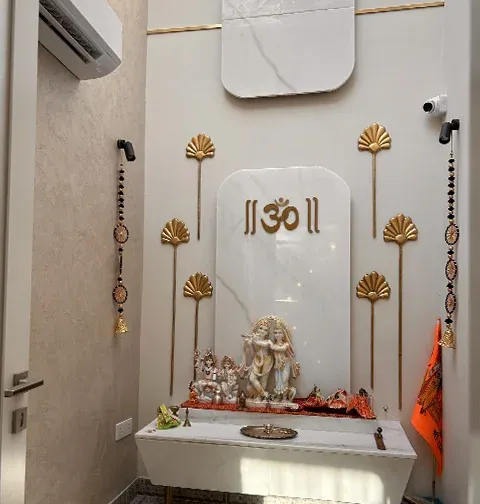
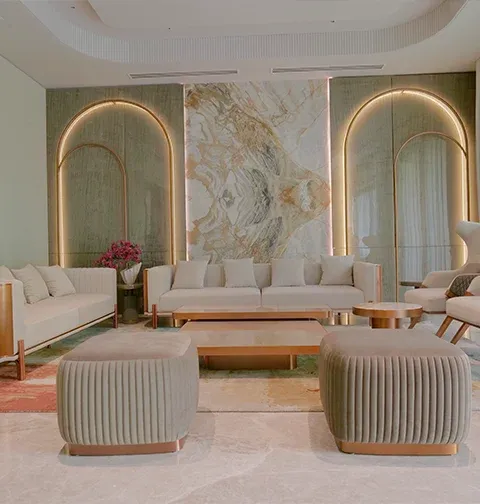
- White marble or backlit onyx works beautifully behind the idol. Both feel serene, and they pair naturally with brass bells and carved wooden doors.
- Keep gold to one or two moments, such as a gilded jaali or brass inlay. Restraint makes the room feel graceful rather than busy.
Interia's work on luxury residential interiors in Gurgaon, at homes such as Tata Primanti and Pioneer Araya, follows the same idea. At DLF The Crest, refined finishes like sleek marble floors were chosen to last, not just to impress.
Plan Light Around the Ritual
- Use warm white LEDs in coves and niches. They run much cooler than old incandescent bulbs, which suits a small room filled with fresh flowers.
- Add a backlit jaali or onyx panel behind the idol. It creates gentle depth and makes the mandir the clear focal point of the room.
- Fit a dimmer to the main light. Bright light suits cleaning and setup, while a soft glow lets the diyas take over during evening aarti.
In larger homes such as The Camellias in DLF Sector 42, bespoke lighting plans shape every room. A mandir deserves the same thought.
Let the Room Breathe
Fresh air is easy to overlook in a closed mandir. As Umesh Kumar, founder of Interia, put it in an interview with Outlook India, good design should "give prime importance to creating a healthy living space for people.” In a pooja room, that starts with ventilation.
- Research reviewed on the NIH's PubMed Central links incense burning to higher indoor particulate levels, especially in rooms where ventilation is limited.
- Plan a small window, louvered door, or discreet exhaust fan. Smoke from dhoop and diyas can then clear quickly after each evening aarti.
- Light fewer incense sticks at a time during the festival. Nine days of heavy smoke can also dull pale paint, soft fabric, and polished stone.
A room that breathes well stays pleasant throughout the festive period.
Add Festive Layers That Come Off Easily
- Hang fresh marigold and mango leaf torans at the door. They are traditional, fragrant, and easy to replace every few days as they fade.
- Make a petal or powder rangoli at the threshold. A marble entry strip lets you wipe the colours away cleanly the next morning.
- Choose a removable silk or brocade backdrop behind the idols. It can be dry-cleaned and stored safely once the festival ends.
These layers change the mood of the room without changing its structure.
Planning the Mandir by Home Type
Villas and independent homes offer different amounts of space. Each can still hold a mandir that feels complete.
Luxury Villas
- A villa can hold a separate mandir room with a higher ceiling and a temple bell. Place it where family can gather without blocking movement through the house.
- Plan the mandir with the main layout, not after it. Its location, seating, storage, lighting and ventilation should be considered alongside the rest of the home.
- Balance one statement wall with simpler furniture and storage. In a mandir, this keeps the focal area visually rich without making the space feel crowded.
Independent Homes and Builder Floors
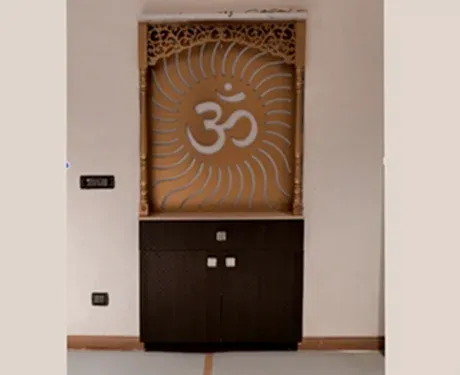
- A custom-built mandir unit with folding doors suits tighter plans. The West Delhi House project shows how custom furniture can blend traditional flair with a modern touch.
- Where wall space is limited, look at unused corners. A stair landing or quiet end of a study can become a compact, well-lit mandir.
Whatever the size, the aim stays the same: a space that feels devoted, practical and uncluttered.
A Pooja Room That Stays Beautiful After Navratri
For a new villa or an existing home, the pooja room works best when it is planned as part of the larger interior. The right balance of material, light, and air keeps it practical long after the festival ends. Good luxury residential interiors are judged less by how a room looks on the first day and more by how it works every day after. At Interia, the mandir is shaped through the same briefing and space analysis as the rest of the home, so it fits a family's rituals as naturally as its daily routine.
frequently asked questions
Many families prefer the northeast as per Vastu tradition. A designer will also weigh light, ventilation, movement, and how often the family prays. The best location balances belief with daily comfort, so the space is used and loved every day.
Use a light wall colour, one backlit panel, and a single marigold toran. Add a brass diya and a simple petal rangoli at the door. Keep surfaces clear so the space feels calm, not crowded, during all nine festive nights.
Research shows incense smoke adds fine particles to indoor air. It is wise to keep a window or vent open, or run an exhaust fan, while burning dhoop. Use fewer sticks and let the room air out after each aarti.
Marble, onyx, carved teak, and brass are popular choices in premium homes. They look rich, last for decades, and clean easily after daily rituals. Pair a white stone backdrop with brass diyas and wooden doors for a balanced, timeless look.
Yes. Most existing homes can gain a better mandir without major construction. A wall niche, stair landing or unused corner can be refitted with new lighting, stone, storage, and ventilation. Good planning makes even a small space feel calm and peaceful.