blog post
The Role of AI and Robotics in Next-Gen Home Design Projects
The home interior design services are rapidly evolving. This is being fuelled by artificial intelligence and robotics. In India, a burgeoning middle class aspires to homes that are both intimate in appearance and feel. Due to this, the tools that were once regarded as the future have become ordinary instruments for home interior designers in Delhi and other regions of the country. Robotics and AI can accelerate space planning and reduce monotonous routines, which makes the dream-home process faster, more interactive, and innovative.
This blog explores the multifaceted role of AI and robotics in next-generation home design projects in India, highlighting their current applications, potential impact, and the exciting possibilities they unlock for both designers and homeowners.
A.I. as Creative Collaborator
Artificial intelligence does not just do routine tasks. It has become an innovative contributor. AI uses massive data and sophisticated algorithms to follow trends, spatial relationships, and develop new design concepts based on the preferences and constraints of a specific individual.
Artificial Intelligence Design Tools
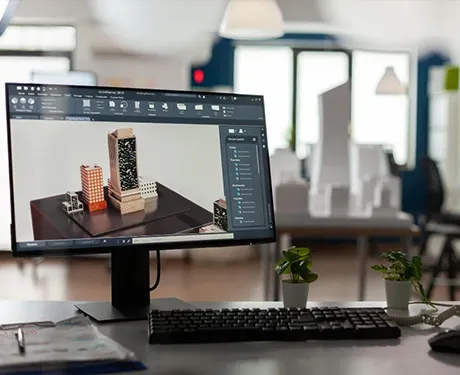
Consider software that could read your social media feeds, observe your style, and study your floor plan to generate multiple layouts and mood boards within a few minutes. Even now, a few AI-powered apps allow a homeowner and a designer to view various furniture placements, colour palettes, and interior design styles in photo-realistic 3D. These home interior design services, enhanced by AI, create an interactive cycle that accelerates the initial idea phase and eliminates time and cost.
Personalized Recommendations
AI algorithms analyse the preferences of a homeowner, their budget, and the peculiarities of the room to recommend furniture, materials, and accessories provided by different suppliers. Such selective suggestions can simplify the decision-making process, provide suitable alternatives, and even show paths that the homeowner or the designer would not have identified. AI is invaluable in satisfying individual needs, especially in the case of designers who are struggling to satisfy the varied tastes.
Space Optimization
Every square foot is precious in cramped city apartments. Floor plans and furniture sizes can be scanned by AI and optimised to be functional and flow efficiently using every inch. AI algorithms can analyse floor plans and furniture dimensions to optimise layouts for functionality and flow, ensuring that every inch of space is utilised effectively. This can be particularly beneficial for compact apartments or multi-functional rooms.
Predictive Modelling
AI can even predict how different design choices in home interior design services might impact factors like natural light, acoustics, and energy efficiency. By simulating these aspects, designers can make informed decisions that not only enhance the aesthetic appeal but also the comfort and sustainability of the home.
The Robotic Revolution: Automation in Interior Design Implementation
Artificial intelligence is transforming the design process of houses, and robotics will transform the process of constructing them. With the help of robots, painting and the manipulation of materials are quicker, cheaper, and precise.
Robotic Painting / Finishing
Tasks that require repetition, such as painting walls, consume a lot of time and effort. This work is now much faster and of consistent quality, thanks to robots in home interior design services. A single robot can paint intricate designs or flawless surfaces, leaving people free to do more creative work.
Automatic Material Handling and Installation
Large projects are difficult to move heavy materials or install flooring, tiles, and prefabricated pieces. Robots are capable of carrying and transporting them, helping build floors and tiles, and even stacking ready modules. This accelerates the job, reduces injury, and reduces project duration.
Prefabrication and Modular
Modern modular and prefabricated construction, despite not being strictly robotics, fits the ideal of automation. In a robot-assisted factory, groups assemble finished units of a house. This factory labour generates greater precision, reduces on-site time, and decreases losses. This is an addition to the fast urban growth of India, where speed and efficiency are more important.
Smart Home Integration
Smart home technologies are also connected through robots. They assist in the installation and programming of smart lighting, automated blinds, security systems, and other devices, making homes look good and be easy to operate.
The Symbiotic Future: Human Creativity Augmented by Technology
Home interior designers in Delhi or anywhere in the world are not replaced by AI and robotics. Rather, the tools enhance human creativity and efficiency. Instead, designers can use AI insights to consider numerous possibilities, automate dull roles, and concentrate on complicated tasks like understanding the mood of clients, selecting distinctive artistic components, and providing custom style recommendations.
Robotics can fill the hard, repetitive tasks of construction and installation, leaving human employees to concentrate on craft and detail work. The future of home interior designing in India will be in the form of a team effort where human ingenuity and hi-tech technology will collaborate to come up with exceptional living spaces.
Fears and Novelties
With AI and robotics entering home design, questions arise about the loss of creativity and whether robot workers will take the place of humans. These are questions that are important and which require truthful responses.
Retaining Human Creativity
Artificial intelligence is nothing but a tool. The process will continue to be led by designers who will leverage AI to get new ideas and test more options in a shorter period. A human touch- to make feeling tangible, in the form of rooms- will remain priceless.
Work Role Transitions
Certain manual procedures will be automated, although robotics will also create new robot programming jobs, system maintenance jobs, and jobs related to the management of automated construction. Skills will be oriented towards design combined with technology.
Interia: Embracing Innovation in Home Design
We are at the forefront of home interior design services in India at Interia. We experience the strength of AI and robotics, and we are experimenting with how it can accelerate our work, personalise designs, and increase the quality and performance of each project.
We believe that the future of home design lies in the seamless integration of human creativity and technological capabilities. By embracing AI-powered tools for design conceptualisation and leveraging robotic automation for precise and efficient execution, we aim to create homes that are not only aesthetically stunning but also functionally optimised and built to the highest standards.
Conclusion:
The combination of AI and robotics is bringing a new era of interest in home interior design projects in India. The technologies provide an opportunity to automate work processes, customise designs, maximise space, and improve the overall quality and efficiency of home building and renovation. To the home interior designers in Delhi and all over the country, the adoption of these advances will serve as the crucial element in remaining competitive and providing high value to their customers. The algorithmic architect and the robotic builder do not supplant human skill; they complement it, and establish the path to a future in which our living environments will be smarter designed, executed more efficiently, and precisely to our own needs and desires.
Are you ready to taste the future of home design?
To discuss a consultation, contact Interia today and learn how our new style of thinking that encompasses the latest technologies can make your home a personal and unique place to live. We will navigate you through the possibilities of next-gen home design!
FAQs:
Q: What role does AI play in personalising home interior design?
A: AI uses your preferences based on the images and data it receives to create design layouts, mood boards, and furniture suggestions that are specifically customised to your design tastes and room settings.
Q: Are human interior designers going to be replaced by AI?
A: No, AI serves as a means to enhance the creativity of a designer. It eliminates repetitive processes and gives insights, which enables the designers to work on the subtle, creative, and emotional aspects of their jobs.
Q: How does robotics come in when it comes to home design projects?
A: Robotics can automate such physically demanding work as painting and the installation of materials. This makes things more accurate and efficient, shortens project schedules, and enables human labourers to perform skilled work.
Q: Are there any possibilities of using AI to optimise space in a small apartment?
A: Yes, AI algorithms can be used to analyse floor plans to come up with optimised layouts wherein the functionality and flow are maximised, and this can be very helpful when it comes to maximising the limited square footage of homes within a city.
Q: What happens to the cost of home design services with technology such as this?
A: There are always initial costs in technology, but efficiency achieved through AI and robotics may result in a shorter labour time and waste of materials, which, in the long run, can assist in streamlining the cost and schedule of the project at hand.