blog post
How Residential Designers Create Functional & Stylish Living Spaces
We’ve all seen those "magazine-perfect" homes—the ones with white velvet sofas, glass coffee tables, and not a single charging cable in sight. They look breathtaking in a photo, but these stylish spaces often leave you wondering: Where do these people put their keys? Where does the laundry go? Does anyone actually live here?
A house that looks like a gallery but functions like a puzzle is, quite frankly, a failed design. This is where a skilled residential interior designer earns their keep. In a city as fast-paced as Delhi, your home shouldn’t just be a backdrop for your life; it should be the engine that supports it.
Creating a home that is both "Instagrammable" and actually easy to live in isn't a happy accident. It’s a mix of clever engineering, a bit of psychology, and a sharp eye for style. Here’s how the best residential interior design services turn a house into a high-functioning sanctuary.
1. Flow First, Decor Second
If you ask any top-tier residential interior designers in Delhi, they’ll tell you the same thing: spatial flow is the "skeleton" of a home. You can buy the most expensive Italian marble or a designer chandelier, but if the layout makes you walk across the entire house to get from the kitchen to the dining table, you’ll eventually grow to hate it.
Professional designers look at a floor plan as a series of "zones."
- Public vs. Private: They create invisible boundaries that separate guest areas from family bedrooms. This ensures that a dinner party in the living room doesn't wake up a sleeping toddler.
- The "Clearance" Rule: A designer calculates exactly how much space you need to pull out a dining chair or open a wardrobe door without hitting the bed. It’s these tiny measurements that make a room feel "airy" rather than cramped.
2. The Secret Art of Hidden Storage
The biggest difference between a DIY home and a professionally designed one is how clutter is handled. A great designer builds storage into the architecture itself.
Think of "disappearing" wardrobes that look like elegant wall panels, or kitchen cabinets that reach all the way to the ceiling so you don't have dust-gathering gaps. The goal is to make sure every single item—from your vacuum cleaner to your spare linens—has a "home." When the clutter is hidden, the style finally has room to breathe.
3. Lighting: The Mood Maker
Lighting is the most powerful tool in a designer’s kit, yet it’s often the most overlooked. A single bright bulb in the middle of the ceiling makes a room feel flat and clinical. Instead, designers use "Layered Lighting."
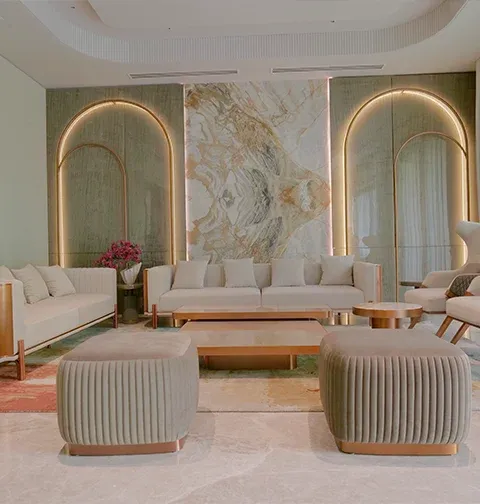
They mix ambient light (for general visibility), task light (focused beams for reading or cooking), and accent light (hidden LEDs that make a textured wall or a piece of art pop). When these layers work together, the room feels warm, expensive, and inviting all at once.
Why Interia is the Gold Standard for Delhi Homeowners
When it comes to finding the right residential interior designer, Interia is a name that consistently comes up. But what makes them different from a standard design firm?
The "Logic Meets Art" Approach
Founded by Umesh Kumar (an alumnus of IIT Delhi and IIM Bangalore), Interia brings a level of technical precision that is rare in the creative world. Every project is approached like an engineering feat but finished with the soul of an artist. They don't just "guess" where a light should go; they calculate the lumens.
Total Ownership (The Turnkey Model)
Interia doesn’t just give you a 3D drawing and leave you to find your own contractors. They handle the whole thing.
- In-House Manufacturing: They have their own state-of-the-art facility where your furniture is custom-made. This means no "middleman" delays and total control over the wood and finishes.
- 300+ Quality Checks: Their team follows a massive checklist for every project. From the smoothness of a drawer slider to the alignment of floor tiles, everything is audited before the keys are handed over.
Designing for Your Story
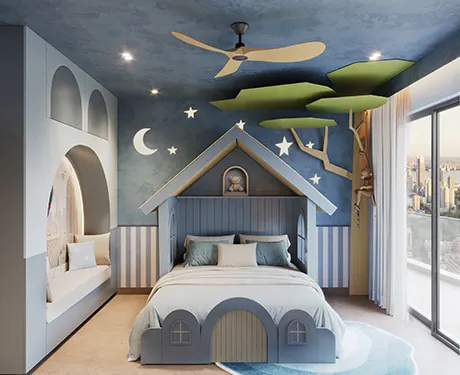
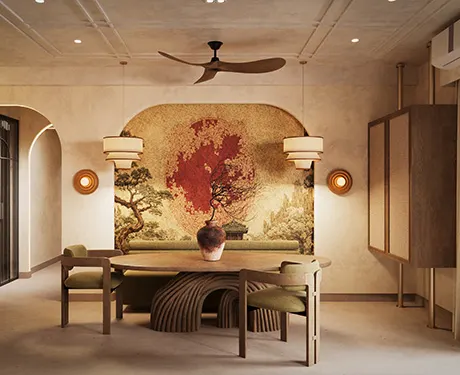
The team at Interia believes that a home should reflect the people living in it, not the designer’s ego. They spend time learning your "lifestyle story"—how you drink your morning coffee, where you like to work, and how your family hangs out. This ensures the final result isn't a "template" home, but a bespoke space tailored specifically to you.
Conclusion: Your Home is an Investment in Your Sanity
Your home is likely your biggest investment—not just financially, but emotionally. It’s where your life happens. Settling for a design that looks good but feels uncomfortable is a compromise you shouldn't have to make.
By working with an expert residential interior designer, you aren't just buying furniture; you’re buying peace of mind. You’re choosing a home that works for you, rather than one you have to struggle with every day.
Ready to see what your home could truly become? Take a look at Interia’s latest projects or book a chat with our team today—let's build a space that’s as functional as it is beautiful.
Frequently Asked Questions
1. Is it worth hiring a designer for a small apartment?
Honestly, designers are more valuable in small spaces. They know how to use vertical storage and light-reflecting palettes to make a 2BHK feel like a 3BHK.
2. How does Interia handle budgets?
Transparency is huge here. They provide a detailed Bill of Quantities (BoQ) at the very beginning. Because they own their manufacturing unit, they stick to the quoted price without the "hidden costs" that often pop up in the middle of a project.
3. What’s the big trend for 2026?
We’re seeing a shift toward "Warm Minimalism." People want clean lines and less "stuff," but they want rich textures like natural stone, curved furniture, and warm wood instead of cold, clinical whites.