blog post
Renovating an Older Villa Without Making It Look Like a Completely Different Property
Older villas have qualities that new homes find hard to copy. Think thick walls, high ceilings, and a courtyard that catches the evening light. But age shows up in other ways too. The wiring trips, the bathrooms leak, and the kitchen no longer suits how your family lives. You want a fix, not a stranger’s house.
That is the real risk with renovation. A heavy-handed approach can strip away the details that made the home special. The better way is to protect what gives the villa its identity and quietly upgrade what no longer works. This guide shows how experienced residential interior designers in Gurgaon decide what to keep, what to change, and what to check first.
Read the House Before You Change It
Every older villa has a few features that shape its personality, and good residential interior designers in Gurgaon usually list them before drawing a single new plan.
Spot the Character Features
- Original materials: Stone floors, teak doors, and old brick walls carry the home’s history. Restoring them often keeps more character than any new finish can add.
- Proportions: Ceiling heights, wide corridors, and window sizes define how a villa feels. Changing them too much is the fastest way to make it look like a new building.
Separate Charm From Damage
- Hidden risks in old paint: Toxics Link’s 2025 research shows lead in paint is still a concern in India, despite a 90 ppm legal limit. Test old layers before sanding.
- Structural signs: Deep cracks, damp patches, and sagging slabs need a structural engineer. Also involve one before removing walls, widening openings or adding a new floor.
Once you know what to protect, every later decision becomes easier.
Upgrade the Systems First, Then the Surfaces
Most older villas struggle because their wiring, plumbing and waterproofing were planned for a very different way of living.
- Electrical load: Fans, coolers and ACs use about 40% of household electricity in India. Have a licensed electrician check the wiring, earthing, and distribution board before adding new appliances.
- Plumbing and water: Gurgaon faces serious groundwater stress, with extraction above permitted limits. Replace leaking or corroded pipes, check water pressure, and choose low-flow taps and showers.
- Waterproofing: Terraces and bathrooms in older homes usually lose their waterproofing first. Redo it before new tiles go down, or the damp will simply return.
- Ask for a services plan: Good home interior designers in Gurgaon will share more than mood boards. Ask for drawings that show new wiring, plumbing, and AC routes.
Hidden upgrades rarely get compliments, but they protect everything you see.
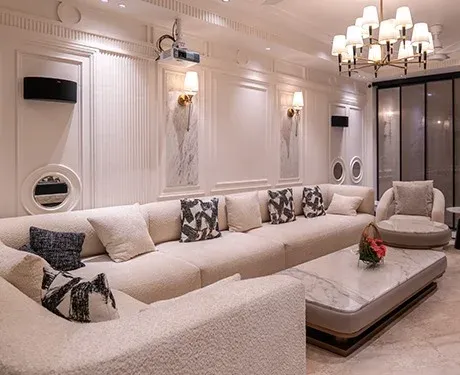
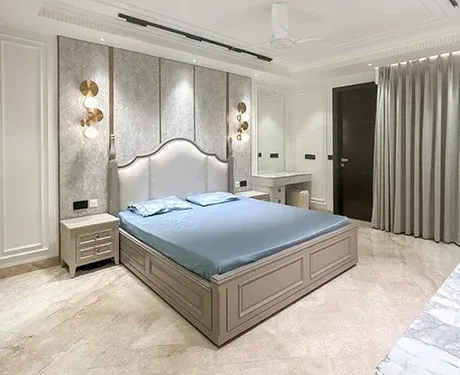
Choose Materials That Respect the Original Palette
New materials should sit comfortably beside the old ones, not compete with them.
Pick Compatible Finishes
- Match the mood, not the item: If the house has warm teak and Kota stone, pick finishes in similar tones and textures. Exact copies of old materials often look fake.
- Reuse what you can: Retaining sound flooring, doors and timber reduces demolition waste and the need for new products. Assess their condition first, then restore what is safe to keep.
- Plan for local dust: For luxury residential interiors in Gurgaon, matte stone, sealed wood and textured fabrics hide dust better than high-gloss surfaces. They also age more gracefully.
Handle the Joins Between Old and New
- When old flooring cannot be matched: If original stone is damaged or no longer available, frame the new section with a contrasting border. A planned difference looks better than a near match.
- Where new tiles meet old stone: Place the change at a doorway, using a stone or brass threshold strip. A break in the middle of a room usually looks like a repair.
- Good doors, damaged frames: If the teak shutters are sound, repair or remake only the frames. Then refinish the shutters so the old wood and new frame read as one.
- Decorative ceilings: Avoid cutting into cornices and mouldings for new lights. Use wall lights, floor lamps and existing points, and route new wiring through walls instead.
Small transition details decide whether a renovation looks planned or patched.
Let New Pieces Support the Old Story
In a 2026 AFP interview about heritage buildings, conservation architect Abha Narain Lambah said “there is a warp and weft of new and old”. The idea holds inside a villa too.
- Custom furniture: Older villas often have uneven walls, deep window niches and odd openings. Interia builds furniture in its own manufacturing facility, so pieces can be measured around these features.
- Careful layout changes: Open up a kitchen or merge rooms only after a structural engineer approves it. Try to keep at least one room close to its original plan.
When new pieces fit the scale of the house, the villa feels refreshed, not replaced.
Plan the Budget for Hidden Surprises
Older homes often reveal concealed problems once walls and floors are opened, so the budget needs room for them.
- Start with a condition survey: Before design begins, record the state of the structure, wiring, plumbing, and waterproofing. This turns guesswork into a clear list of real repairs.
- Ask for an itemised scope: A line-by-line scope shows what is included, what is excluded, and what each part costs. It makes later changes easier to discuss and approve.
- Keep a contingency reserve: Set aside a separate amount for hidden damage. Agree in writing how surprises will be reported, priced and approved before any extra work starts.
A budget that expects surprises is far less stressful than one that ignores them.
Questions to Ask Before You Hire
A few simple questions can show whether a team is ready for an older home.
- Have you renovated older homes? Ask any interior designer in Gurgaon to show past renovation work, not only new builds. Old homes bring surprises that need real experience.
- Who coordinates structural and interior work? Ask whether the team works with architects, structural engineers and specialist contractors. This matters when layouts, openings or old services change.
- How do you handle surprises? Ask how hidden damage will change the cost and the timeline. A clear approval process protects both your budget and your peace of mind.
Clear answers here usually point to a calmer project.
Why Connected Design and Execution Matters
Interia’s architectural design services cover significant renovations of older properties, with architecture and interiors planned together from the start. Its first design-and-build project in April 2011 was a kothi renovation in DLF Phase 1 with custom furniture.
- One design intent: When the same team designs and builds, small details like door profiles and stone edges stay consistent from the drawing to the site.
- Supervised execution: The firm’s execution covers coordination, procurement, site supervision and 300+ quality checks. This matters when new work has to sit right next to old surfaces.
Consistency is what keeps a renovated villa looking like itself.
Keeping Your Villa’s Character for the Next Chapter
A good renovation should feel like the same villa on its best day. Protect what defines it, fix the systems first, plan for surprises and choose materials that suit the old ones. Working with experienced residential interior designers in Gurgaon makes these choices easier to get right. Planning to refresh an older villa? Talk to The Interia and begin with a walkthrough of what your home already does well.
frequently asked questions
Bring one in before removing walls, widening openings, adding a floor or changing the roof. Deep cracks, sagging slabs and long-term damp also need an expert view. A structural check early on prevents costly changes after the work has started.
Often, yes. Sound teak doors can be refinished, old window frames can be repaired, and stone floors can be re-polished. The key is a careful condition check first. Anything rotten, cracked through or unsafe should still be replaced, not patched.
Start with a condition survey and an itemised scope of work. Then keep a separate contingency reserve for hidden damage. Agree in writing how extra work will be reported, priced and approved, so that surprises do not turn into disputes.
Sometimes, if work happens in phases. Living in the house is hard during electrical, plumbing or flooring work because of dust, noise and power cuts. Many families move out for the heaviest phase and return later for the finishing work.
It depends on the villa’s size, its condition and how much structural or services work is needed. A cosmetic refresh takes far less time than rewiring, re-plumbing and waterproofing. A site survey gives the most reliable timeline for your home.