blog post
Dark Charcoal, Ivory Stone and Warm Oak: How Contrasting Materials Create Depth in Luxury Interiors
Walk into two homes with the same budget, and one can feel rich while the other feels flat. The difference is rarely the price of the finishes. It is how those finishes meet. A charcoal wall beside pale stone, softened by warm oak, gives the eye somewhere to travel. That is what designers mean by depth.
This guide shows how that trio works in luxury residential interiors: which version of each material to choose, how a real Gurgaon home uses it, and what to check before you sign off on samples.
How Light, Texture and Visual Weight Work Together
Contrast is how the eye reads depth in a room. It depends less on colour alone and more on how each surface handles light, touch and visual weight. Get these right, and luxury residential interiors feel richer with fewer materials. Three effects do most of the work.
- Light and reflectance: Pale, polished ivory stone reflects far more light than a matte charcoal wall. A honed finish reflects less, so the same stone can look brighter or softer.
- Visual weight: Dark surfaces tend to draw the eye and read as more solid. On a base cabinet or feature wall, charcoal grounds a room. Across every wall, it can feel heavy.
- Texture and touch: Honed stone feels cool and smooth, brushed oak feels warm and grainy, and matte charcoal sits between them. Varied texture adds depth even when colours are close.
Depth comes from planning these three effects together, not from adding more decor.
Choosing the Right Version of Each Material
Each material comes in several forms, and each form looks, ages and wears differently.
Dark Charcoal
- Charcoal stone or marble: Polished finishes can make fingerprints, smudges and some surface marks more noticeable. Honed and leathered finishes look softer, but their stain resistance depends on the stone itself.
- Matte paint, plaster or veneer: These offer an alternative to extensive stone cladding on walls and wardrobe shutters. Their cost, repairability and upkeep depend on the product, substrate and finish chosen.
Ivory Stone
- Marble and limestone: Both are natural, calcium-based stones, so acids such as lemon juice can etch them. Porosity varies from stone to stone, so follow the supplier's sealing advice for each slab.
- Engineered quartz: This is a manufactured surface, not natural stone. Most products are non-porous and stain-resistant, but heat tolerance differs, so check the manufacturer's guidance before using it near hobs.
Warm Oak
- Solid oak: It can be sanded and refinished several times, making it ideal for dining tables and heirloom pieces. Solid timber moves more with humidity, so careful seasoning and joinery design matter.
- Oak veneer: A thin layer of real oak bonded to a stable board, veneer gives consistent grain across large wall panels and shutters. It suits joinery and panelling rather than flooring.
- Engineered oak flooring: A real oak wear layer sits on a layered core. This construction generally makes it more dimensionally stable than solid wood as humidity changes, though installation still matters.
The version you choose matters as much as the colour. For broader advice, see how premium materials transform ordinary homes.
A Real Example: The Malibu Town Residence
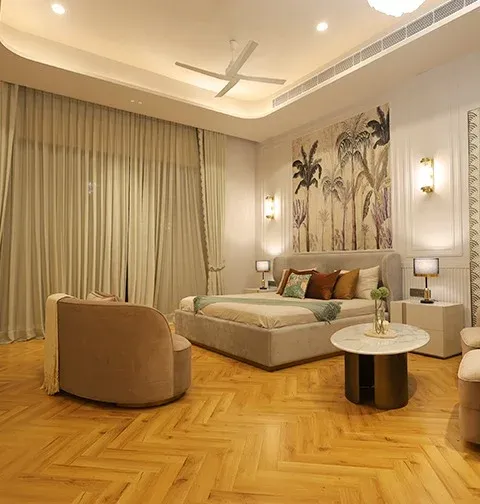
Interia's Malibu Town Residence is a 10,500 sq. ft. home in Sector 47, Gurgaon, delivered in 2023 over eight months. It uses dark charcoal panelling, ivory stone and warm oak details to create contrast.
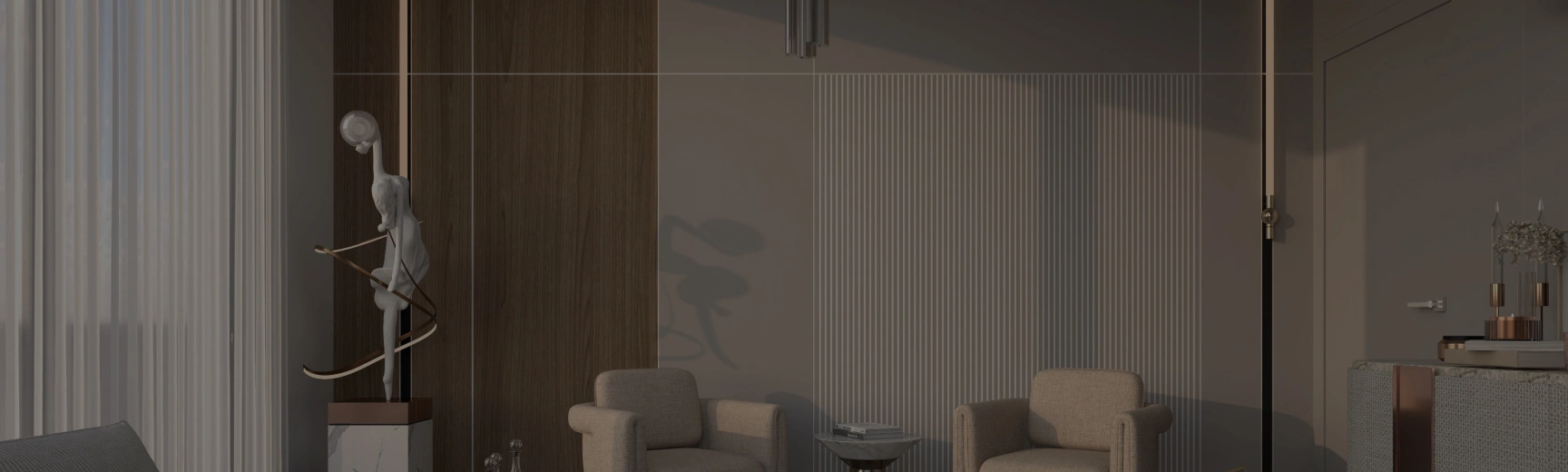
- Charcoal panelling with ribbed detail: Dark charcoal panelling, paired with custom ribbed wall details, gives the main spaces a strong base. The ribs add shadow lines, so the dark surface reads as texture, not flatness.
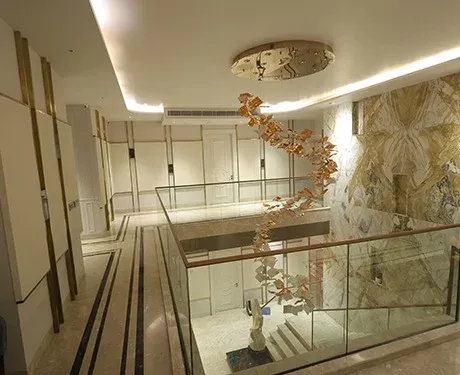
- Ivory stone against black marble: Ivory stone balances the darker panelling and black marble. The light and dark pairing keeps large rooms from feeling heavy while giving each zone a clear focal point.
- Oak and lighting to connect zones: Warm oak details soften the darker surfaces, while tailored upholstery and metal track lighting add layers. Together, they help entertainment and family areas read as one design.
A lived-in home shows how placement and proportion shape the final effect.
Balancing the Palette Room by Room
Balance depends on how each room is used. A good luxury residential interior designer will adjust the mix room by room, using these starting points.
- Treat 60-30-10 as a guide: One material leading, a second supporting and a third as accent is a useful starting point. Adjust it for daylight, ceiling height, existing finishes and personal taste.
- Living rooms: Use ivory stone or oak on the largest surfaces, with charcoal on a media wall or panelled niche. This keeps the room bright while giving it a focal point.
- Kitchens: A charcoal island with ivory counters and oak shutters suits open plans. Choose each finish for heat, oil and daily cleaning, not just looks.
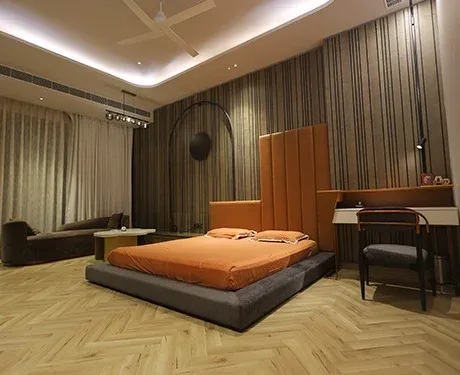
- Bedrooms and bathrooms: Charcoal behind a headboard creates a calm, enclosed feel. Oak wardrobes add warmth, while an ivory stone vanity keeps the attached bath bright and fresh.
The palette can stay the same while its proportions change with each room's purpose.
Lighting, Maintenance and Installation
In high-end residential interiors, even the best materials need the right lighting and installation to show well.
- Light quality: Warm 2700K to 3000K lamps suit most homes. A high colour rendering index, ideally 90 or above, shows stone veining and oak grain more accurately.
- Direction and glare: Grazing light brings out texture in honed stone and charcoal plaster. On polished stone, it can cause glare, so test fixture positions against the actual finish.
- Oak installation: Let oak flooring and panels acclimatise on site before fitting. Check subfloor moisture and follow the manufacturer's guidance, since installation affects long-term stability as much as the product.
Planning these details early prevents most problems homeowners notice after moving in.
What to Check Before You Approve
Ask these questions before stone is cut and joinery is made.
- Full-size samples: Experienced luxury interior designers in Gurgaon should show full slabs and large oak panels, so you can judge veining, grain and colour variation at true scale.
- Climate and upkeep: Gurgaon homes deal with dust and seasonal humidity. Your designer should explain the sealing, finishing, and cleaning routine for every surface you choose.
- Finish inspection: Small flaws are easy to spot in a contrast palette. Check veneer grain matching, stone joint consistency, shutter alignment and hardware fit before handover.
Sourcing matters too. Sanjay Seth, CEO of GRIHA Council, highlights locally sourced materials, including natural stone, and warns that efficient materials added late "come at an additional cost". He cites a campus that cut energy use by 68% using passive design and local Kota stone. Local sourcing can reduce transport emissions, although overall impact also depends on extraction, processing and manufacturing.
A 2025 GRIHA Council study found gaps in India-specific embodied carbon data. Environmental Product Declarations help, since they report a product's environmental impact. An EPD is information, though, not proof that one product is the greener choice.
Clear answers here protect both the look of the home and the budget behind it.
Coordinating Material Selection and Execution
Contrast palettes need precise execution, because small mismatches are easy to see.
- One connected process: As a bespoke interior designer in Gurgaon, Interia brings design, material selection, execution, and project management into one turnkey workflow, so decisions are not lost between contractors.
- Made and checked in-house: Custom oak joinery and panelling are made at the firm's own manufacturing facility, and projects pass more than 300 quality checks before handover, giving closer control over finish consistency.
The aim is a home where contrast feels deliberate and holds up to daily life.
Bringing Depth Home With Three Materials
Dark charcoal, ivory stone, and warm oak work because each does a different job. Charcoal anchors, stone brightens, and oak connects. When finishes, proportions, lighting and upkeep are planned together, luxury residential interiors gain depth that lasts. If you are weighing this palette for your own home, a consultation with The Interia is a good way to see the materials side by side and test them against your rooms.
frequently asked questions
Yes, in measured amounts. Use charcoal on one wall, a cabinet or a run of joinery rather than on every surface. Balance it with ivory stone or pale oak, and plan warm, layered lighting so the room stays fully comfortable.
Engineered quartz is usually the easiest, as most products are non-porous and need no sealing. Marble and limestone need regular sealing and gentle, pH-neutral cleaning. Always follow the specific manufacturer's or supplier's care guidance for your chosen surface, especially in kitchens.
Engineered oak is generally more dimensionally stable when humidity changes, thanks to its layered core. Solid oak can be refinished more times. Either way, acclimatisation, subfloor moisture checks and correct installation matter just as much as the product you choose.
Natural materials in a restrained palette usually age better than trend-led colours, though no design is completely trend-proof. You can easily refresh the look later through fabrics, art and lighting while keeping the stone, oak and charcoal surfaces fully intact.
Place large samples of all three materials together on site. View them in morning light, evening light and under your planned fittings. Photograph each arrangement so you can compare the options side by side before you confirm any final orders.