blog post
How Best Interior Design Firms Transform Workspaces with Unmatched Quality and Style
The modern workplace is no longer just a collection of desks and ergonomic chairs; it is a high-performance tool designed to fuel productivity, brand identity, and employee well-being. In a post-2025 world, the "office" has a new competitor: the comfort of home. To get teams back into a collaborative environment, the physical space must offer something superior—a blend of "Deep Work" zones and "Social Hubs" that foster a sense of belonging.
The best interior design firms understand that an office is a physical manifestation of a company’s culture. If the space feels clinical or outdated, the output often follows suit. Here is how leading design teams are redefining the corporate world with a focus on unmatched quality and style.
The Strategy Behind a High-Performance Workspace
Transforming a commercial shell into an inspiring office is a feat of engineering as much as it is an art. An office interior design company doesn't just look at floor plans; they look at movement patterns. They analyze how data flows through the building and how light affects the focus levels of the team.
The shift today is toward "Agile Design." This means creating spaces that can adapt. A conference room that can be divided into two private focus pods or a cafeteria that doubles as an "All-Hands" meeting hall. By creating multi-functional zones, top firms ensure that the real estate is working as hard as the employees.
1. Quality Beyond the Surface: The "Invisible" Infrastructure
When we talk about "unmatched quality," we aren't just talking about the finish of a boardroom table. The best interior design firms prioritize the elements you cannot see.
- Acoustic Engineering: In an open-office layout, noise is the biggest productivity killer. Leading firms use acoustic felt panels, sound-absorbing baffles, and strategic "white noise" systems to ensure that a conversation in the lounge doesn't distract someone in a deep-work zone.
- Lighting and Circadian Rhythm: High-quality workspaces now feature smart lighting systems that adjust based on the time of day. Cooler blue tones in the morning promote alertness, while warmer tones in the late afternoon help reduce eye strain.
- Air Quality and Biophilia: Air filtration is now a standard luxury. By integrating indoor air purification systems and live greenery, an office interior design company creates a "Green Lung" within the office, significantly reducing sick leave and mental fatigue.
2. Brand Storytelling Through Physical Design
Your office is your most powerful recruitment and sales tool. When a potential hire or a high-value client walks through the door, the design should tell them exactly who you are without a word being spoken.
The best interior design firms move away from generic "corporate" looks. They use custom-designed furniture, brand-aligned color palettes, and curated art installations to create a narrative. Whether it’s a high-energy tech firm that needs vibrant, open spaces or a legal firm that requires a sense of gravitas and privacy, the design should feel like a custom suit—perfectly tailored to the occupant.
3. The "Resimercial" Trend: Blending Office and Home
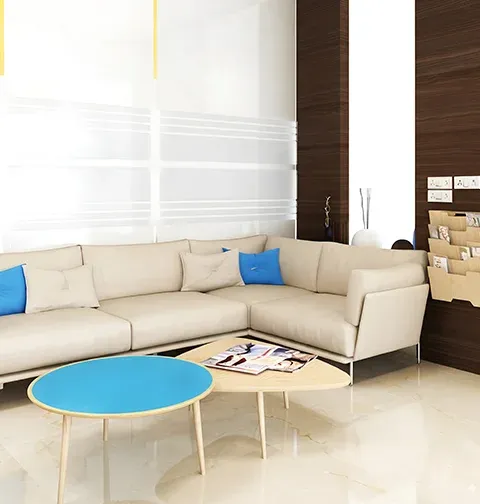
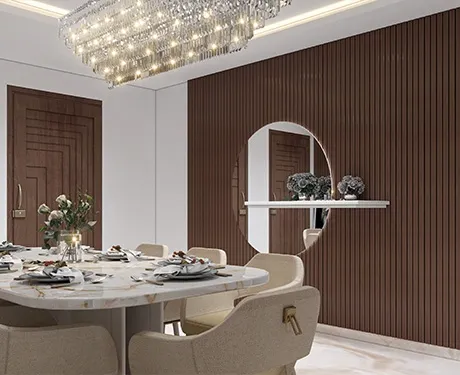
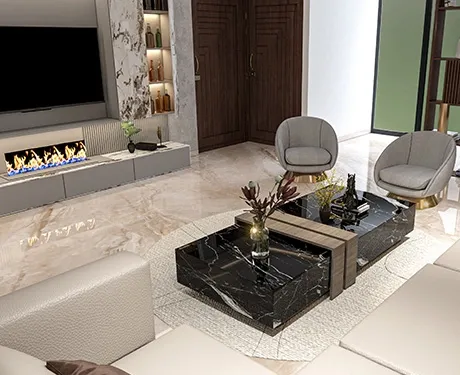
One of the most significant shifts in 2026 is the rise of "Resimercial" design—a fusion of residential comfort and commercial durability. The best interior design firms are introducing soft seating, warm wood finishes, and cozy breakroom nooks that feel more like a high-end cafe than a cubicle farm.
This approach isn't just about comfort; it’s about psychology. When employees feel "at ease" in their physical environment, their creative risk-taking increases. However, the "quality" aspect ensures that these residential-looking pieces are built to commercial-grade standards, handling high traffic and frequent use without showing wear.
Why Interia is the Benchmark for Office Transformations
In a market crowded with contractors, Interia has carved out a niche as the best interior design firm for those who refuse to compromise on technical precision. Our approach to office design is rooted in "Performance Architecture." We don't just design offices; we build ecosystems for success.
What makes Interia the preferred office interior design company is our absolute control over the supply chain. With our in-house manufacturing, we ensure that the quality of your office furniture isn't dependent on a third-party supplier’s timeline. We deliver "Turnkey" workspaces where every element—from the HVAC layout to the custom-branded reception desk—is executed with surgical accuracy.
At Interia, we understand that for a business, time is money. Our project management systems are designed to minimize downtime, ensuring that your transition into a new workspace is as seamless as the design itself. We bring the same level of soul and empathy to a 500-seater corporate headquarters as we do to a luxury boutique villa, making us a unique leader in the Indian design landscape.
Conclusion: Investing in Your Greatest Asset
At the end of the day, a company’s greatest asset is its people. By investing in a workspace that prioritizes quality, style, and functionality, you are making a direct investment in your team’s future. The best interior design firms don't just change the look of a room; they change the energy of the people inside it.
A well-designed office by Interia is more than a place to work; it is a destination. It is a space where ideas grow, brands come to life, and quality is felt in every interaction.
Is your office working for you, or against you?
Experience the power of a workspace designed for the future. Let’s create a space that inspires your team to do their best work.
Frequently Asked Questions
How long does it take an office interior design company to complete a project?
For a standard corporate office of 5,000 to 10,000 sq. ft., the timeline usually ranges from 8 to 12 weeks. This includes the design phase, civil work, furniture installation, and IT integration. Firms like Interia use "Backwards Integrated" scheduling to ensure the handover date is met without delays.
What is the difference between residential and commercial-grade furniture?
Commercial furniture, or "Contract Grade," is built to withstand 40+ hours of use per week. It uses higher-density foams, rub-tested fabrics, and reinforced joints. While it may look like home furniture, the internal engineering is much more robust to handle the daily hustle of an office.
How do the best interior design firms handle office acoustics?
They use a multi-layered approach involving acoustic ceilings, fabric-wrapped wall panels, and strategic zoning. By placing loud areas (like the pantry or game room) far away from focus zones and using materials with a high NRC (Noise Reduction Coefficient), they create a balanced soundscape.
Can Interia help with office renovations while the team is still working?
Yes, we offer "Phased Execution." This involves breaking the project into stages so that one part of the office remains functional while another is being renovated. We schedule the loudest and most disruptive work after office hours to ensure business continuity.
Is sustainable design more expensive for offices?
Initially, some green materials or energy-efficient lighting may have a slightly higher upfront cost, but they significantly lower operational costs in the long run. Features like LED automation and low-flow plumbing fixtures pay for themselves within 18 to 24 months through reduced utility bills.