blog post
Ergonomic Study Room Furniture: Why Comfort Is the New Productivity Tool
Three hours at the desk and your back's screaming. Neck's stiff. Shoulders feel like someone tied knots in them. And somehow, despite sitting there all afternoon, you've barely scratched your to-do list. The right Tool can help improve your workflow and make your workday more comfortable and productive.
This isn't about work ethic or discipline. It's your furniture fighting against you.
Interia's been designing study rooms across Gurgaon and Delhi NCR for years now. As one of the prominent interior designers in Gurgaon, we often hear the same complaint: spaces that photograph beautifully but turn into torture chambers after 90 minutes of actual use. That designer desk everyone complimented? Wrong height. Those sleek chairs from the showroom? Might as well be sitting on plywood.
The thing is, ergonomic furniture gets misunderstood completely. It's not about adjusting everything or spending a fortune on imported brands. It's about matching furniture to how bodies actually work. Get that right, and productivity stops being something you force; it just flows naturally.
Your Setup Is Probably Wrecking Your Body Right Now
When furniture doesn't fit properly, bodies compensate. Leaning forward because the desk sits too high. Slouching since the chair offers zero lower back support. Neck craned at weird angles because nobody thought about monitor height.
Eight hours daily. Five days weekly. Do that math over months, and you're looking at chronic pain that doesn't quit.
Last summer, a client from Cyber Hub called with debilitating neck pain. Doctors, painkillers, and physical therapy, nothing helped long-term. Turned out her study desk was ridiculously high, forcing her shoulders up constantly. Interia redesigned everything with proper measurements. Three weeks later? Pain gone. Better yet, she started finishing work two hours earlier because she wasn't fidgeting constantly, trying to find comfortable positions.
That's what separates experienced interior designers in Gurgaon from furniture stores, understanding that design impacts health, not just appearance.
Uncomfortable Furniture Costs More Than You Think
Poor ergonomics tanks productivity by 20-30% according to research. That's literally losing two full workdays every week.
For students grinding through JEE or NEET prep, that's the difference between top ranks and mediocre results. For remote workers, it's burnout versus career growth.
Then there's medical costs. Physiotherapy sessions at ₹1500 each. Chiropractor visits. Pain medications that don't actually fix anything. One family spent over ₹2 lakhs treating back issues that started from a badly designed home office.
Quality ergonomic furniture might seem expensive upfront. However, when you consider that it costs less than six months of medical treatment for the problems it prevents, it's a wise investment. For those looking to enhance their workspace, consulting with interior designers in Gurgaon can help you select pieces that not only fit your style but also promote better health and comfort.
What Makes Furniture Actually Ergonomic
When one strips away the marketing hyperbole, ergonomic furniture presents itself as a straightforward concept, essential for interior designers aiming to enhance both functionality and comfort in their spaces.
Chairs Matter Most
A decent chair supports your lower back's natural curve. Sitting down, feet should rest flat with knees at 90 degrees. Armrests let shoulders relax instead of bunching up.
A family recently contacted Interia because their son, studying 14 hours daily for his engineering entrance exam, developed terrible posture. His chair had no back support and a forward-sloping seat. After months of that, his spine looked like a question mark.
New chair with proper lumbar support, correct seat depth, and mesh fabric for ventilation changed everything. Not just comfort, his concentration improved dramatically because he stopped constantly shifting around.
Desk Height Isn't Universal
Standard desks are 75cm high. Great if you're average height. Terrible if you're 5'2" or 6'3".
Correct desk height lets elbows rest at 90 degrees while typing. Wrists stay neutral, not bent awkwardly. This alone prevents repetitive strain injuries plaguing anyone working long hours.
Height-adjustable desks solve this completely. Different family members use them comfortably, plus you can alternate sitting and standing, which interior designers know keeps energy high through marathon work sessions.
Screen Position Nobody Gets Right
Monitor top should align at or slightly below eye level. Distance? Arm's length, roughly.
Most setups have screens too low, forcing constant downward looking. Six months of that creates "tech neck", that forward head posture becoming epidemic among desk workers.
A recent project involved wall-mounting monitors on adjustable arms. Simple change. Massive results. Client's chronic headaches vanished within days.
Lighting Destroys Productivity Too
Ergonomics extends beyond furniture. Lighting affects how bodies feel during extended sessions.
Harsh overhead lights strain eyes. Too dim causes squinting. Both create headaches, exhaustion, and concentration that nosedives.
Layered lighting works best: ambient for overall brightness, task lighting for focused work, and natural light when possible. Interia, being renowned for providing some valuable interior designer’s services, positions desks to maximize daylight without screen glare.
A DLF Phase 3 writer was getting migraines three times weekly. Her study had one brutal tube light straight overhead. Redesigning with warm LED ambient panels, an adjustable desk lamp, and sheer curtains for filtered natural light eliminated migraines completely.
Hiring an interior designer is a valuable investment, especially because they conduct thorough lighting analyses, which are essential for creating the perfect ambiance in a space.
Storage Positioning You're Ignoring
Ergonomics includes how you access stuff. Constantly twisting for files or stretching awkwardly for books creates cumulative strain.
Best setups keep frequently used items within easy reach. Files, stationery, and reference materials, all accessible without excessive movement.
Interia designed a chartered accountant's study in Cyber City, needing quick access to numerous client files. Instead of deep cabinets requiring bending and digging, lateral filing systems were installed at seated arm height. His work pace jumped noticeably because he wasn't wasting energy on awkward movements.
Temperature and Air: The Ignored Factors
Perfect chair, ideal desk height, doesn't matter if you're sweating through Delhi summer or breathing stale air.
Study rooms need proper ventilation and climate control. AC that doesn't blast directly. Ceiling fans avoid screen glare. Air purifiers for Delhi's insane pollution levels.
Plants help beyond aesthetics; snake plants, pothos, and ZZ plants filter air naturally and survive indoor conditions easily.
One Gurgaon family's son experienced constant fatigue while studying. The issue? The AC vent aimed straight at his desk, creating wild temperature swings and disrupting concentration. Redirecting airflow and adding an air purifier stabilized his energy levels immediately.
These details separate mediocre interior designers from exceptional ones—recognizing that ergonomics encompasses entire environments, not isolated furniture pieces.
Custom Beats Generic Every Time
Showrooms won't admit this: their "ergonomic" furniture targets average measurements. The problem is, average people don't exist.
Someone 5'4" needs different desk heights than someone 6'1". Longer legs require a different seat depth than shorter torsos. Growing teenagers need adjustable furniture that evolves with them.
Custom solutions cost more initially, but deliver value that generic furniture never matches. Interia measures every family member using the space and designs accordingly.
For siblings sharing a study room, individual workstations with adjustable elements were created. As kids grow, furniture adapts. Smart interior designers in Gurgaon plan ahead like this, saving families from replacing furniture every few years.
Beautiful AND Functional Isn't a Fantasy
Some think ergonomic means monotonous and that it is completely outdated.
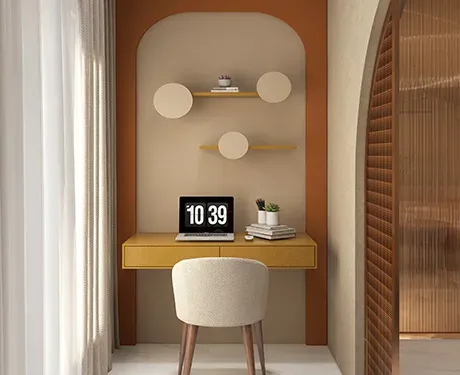
Modern ergonomic furniture exists in every style: Scandinavian minimalism, traditional Indian warmth, sleek contemporary, and industrial edge. The difference is that form follows function instead of vice versa.
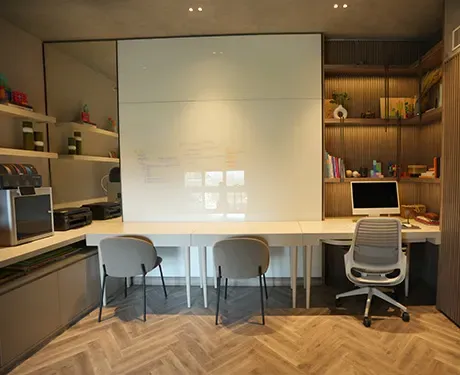
The recent study room project looks magazine-worthy. Gorgeous wood finishes, brass details, and custom shelving. But every element serves ergonomic purposes, perfect desk height, optimal chair support, adjustable layered lighting, and intuitive storage placement.
Beauty and functionality aren't enemies. They're partners when working with interior designers, understanding both.
Starting Point: Where to Begin
Overhauling entire study rooms feels overwhelming. Good news: it's not all-or-nothing.
Start with the chair. Hours spent sitting daily mean immediate impact, and investing in a quality ergonomic chair is the single best choice for improving both productivity and health. Once you have that covered, tackle the desk height. If a complete replacement isn't feasible right away, even basic desk risers can make a significant difference in your work setup.
Focus on lighting, monitor positioning, and room design. As interior designers in Gurgaon, we at Interia guide families through phased renovations, prioritizing changes based on impact and budget. It’s better to improve gradually to avoid costly mistakes.
Money Talk: What's It Worth?
Quality ergonomic furniture costs more than regular stuff. Proper chairs run ₹15,000-50,000. Custom adjustable desks add significantly.
But consider what you're actually buying: better health, higher productivity, fewer sick days, improved focus, furniture lasting years longer.
For students, it's maximizing study efficiency during crucial exam preparation. For professionals, it's sustainable work habits that prevent burnout at 40. For families, it's creating spaces where everyone actually thrives.
Families working with Interia consistently report ergonomic study rooms paying for themselves through productivity gains alone—forget about avoiding medical expenses later.
Ready for a study room that actually works with your body instead of against it?
Interia, one of the leading interior designers in Gurgaon, creates ergonomic spaces that not only look beautiful but also feel even better. The team combines design expertise with a practical understanding of how workspaces affect health and productivity. Whether it's setting up home offices, designing study rooms for exam prep, or creating family workspaces, their solutions are tailored to specific needs rather than relying on generic templates. Contact Interia for a consultation and build spaces where comfort and productivity finally work together instead of fighting each other.
What should ergonomic study furniture cost?
Single workstation with quality chair, adjustable desk, proper lighting, storage runs ₹80,000-2,00,000. Custom solutions through an interior designer’s service typically cost more but deliver personalized results impossible with showroom furniture.
Can existing furniture become ergonomic?
Sometimes. Monitor arms, lumbar cushions, desk risers, footrests improve existing setups somewhat. But fundamentals like wrong desk height or poor chair structure? Modifications only help marginally.
What's the single most important ergonomic element?
Chair, hands down. Hours sitting daily means poor seating creates cascading problems throughout your entire body. Invest here first, compromise elsewhere if needed.
Do children need ergonomic furniture?
Absolutely yes. Bad posture habits form young. Kids need adjustable furniture growing with them, though, which makes experienced interior designers valuable—they know which solutions actually adapt over time.
How do I know my current workspace causes problems?
Regular back pain, neck stiffness, shoulder tension, eye strain, or afternoon fatigue disappearing on weekends? Your workspace is almost certainly the culprit.