blog post
How Residential Interior Designers in Delhi Transform Compact Apartments into Luxury Homes
The architectural landscape of Delhi presents a fascinating study in contrasts. Across premium residential enclaves—from the heritage lanes of Greater Kailash and Vasant Vihar to the expansive high-rise developments in Dwarka—the demand for luxury real estate has reached an all-time high. Yet, as the city grows denser, the physical footprint of urban apartments naturally contracts. This shift makes thoughtful design essential, setting a new benchmark for modern luxury living.
For the contemporary homeowner, this reality introduces a complex design dilemma. The aspiration for a grand, sophisticated home filled with artistic expression often clashes directly with the structural limitations of a compact floor plan.
Historically, the standard approach to decorating smaller apartments relied on a philosophy of pure compromise. Homeowners were told to paint every room stark white, avoid substantial furniture, and accept a basic, purely functional lifestyle.
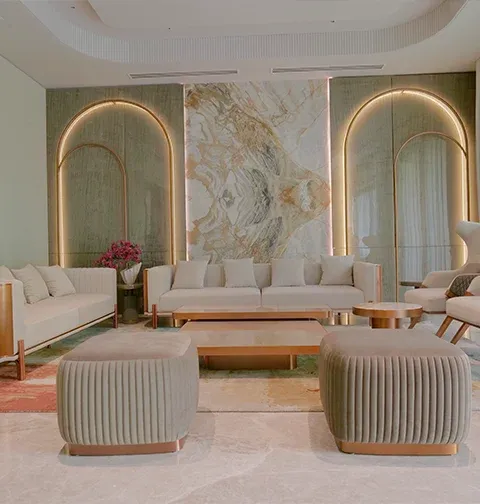
Today, elite design practices completely reject that restrictive mindset. A smaller footprint should never mean a compromise on grandeur. True luxury is not determined by raw square footage; it is defined by spatial intelligence, seamless material transitions, bespoke engineering, and an absolute commitment to structural quality.
By shifting the focus from filling space to sculpting it, premier residential interior designers in Delhi are fundamentally rewriting the rules of urban living. They are proving that with the right design strategy, a compact apartment can be gracefully transformed into an expansive, world-class sanctuary that rivals the presence of a sprawling estate.
The Environmental Psychology of Urban Space in Delhi-NCR
Before diving into physical building materials or furniture layouts, a high-performance design strategy must address how a home's layout affects the human nervous system. Compact apartments often suffer from a lack of natural airflow, limited daylight penetration into interior rooms, and a build-up of daily visual clutter. When an environment feels crowded, it creates a subtle, ongoing layer of subconscious stress that makes it incredibly difficult to relax after a demanding workday.
To combat this, professional home interior designers in Delhi study natural light patterns and behavioral pathways within the home. The goal is to eliminate visual friction—those awkward corners where you bump into a chair, dark hallways that feel uninviting, and messy storage areas that disrupt clean sightlines.
By replacing intrusive, free-standing storage units with smooth architectural elements and opening up key views across rooms, the home instantly feels balanced, open, and deeply calming.
Architectural Strategies for Maximizing Visual Volume
Transforming a compact apartment requires looking at the layout through an architectural lens. Rather than simply accessorizing individual rooms, designers modify the structural shell to alter how scale, height, and depth are perceived.
The Art of "Invisible Zoning" over Rigid Partitions
When space is limited, building traditional brick partition walls to separate a living room, dining bay, and home office is a major design mistake. It cuts off natural light, blocks ventilation, and makes each micro-room feel claustrophobic.
Instead, luxury Homes designers utilize invisible zoning to define distinct functional areas within an open floor plan. By keeping the ceiling entirely continuous and using subtle shifts in flooring materials—such as transitioning from a pristine, book-matched Italian Statuario marble in the main lounge to rich, chevron-patterned smoked oak planks in the dining area—you establish clear borders without losing a single inch of open space.
When absolute privacy is required, sleek, ceiling-recessed fluted glass sliders or automated fabric panels can be drawn closed, creating temporary alcoves that disappear into hidden pockets when open.
Expanding Horizons with Reflective Luxury and Light Management
Natural light behaves uniquely in high-density urban apartments, often struggling to reach the deeper core of the home. To address this, luxury interior designers in Delhi implement a highly sophisticated approach known as reflective luxury.
Instead of using ordinary glass or high-glare metals, designers integrate tinted bronze or charcoal mirrors, matte-satin lacquered wall panels, and premium liquid-metal accents across expansive vertical surfaces. Positioning a floor-to-ceiling tinted mirror feature wall directly opposite an exterior balcony window doesn't just look incredibly sophisticated; it catches the natural morning light and bounces it deep into the interior rooms. This smart placement visually doubles the perceived depth of the room, turning a structural restriction into a stunning design statement.
The Turnkey Advantage: Bespoke Millwork vs. Retail Alternatives
A common mistake when decorating a compact space is purchasing standard, off-the-rack furniture from retail showrooms. Mass-produced items are rarely proportioned for urban apartment dimensions. They leave awkward, unhygienic dust gaps, block natural walking paths, and provide highly inefficient storage storage. True residential luxury requires a tailored fit.
| Design Metric | Mass-Market Retail Alternatives | Interia Bespoke Turnkey Solutions |
| Space Utilization | Fixed dimensions leave dead corners and gaps | Cut to the millimeter to optimize every inch |
| Storage Architecture | Bulky, visible units that crowd floor space | Full-height, flush units that blend into walls |
| Material Longevity | Commercial particle boards prone to sagging | Premium marine ply, rare veneers, stone inlays |
| Visual Continuity | Disjointed pieces that fracture the room | Unified material palette flowing through spaces |
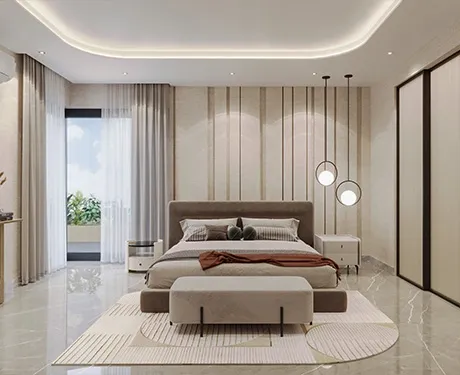
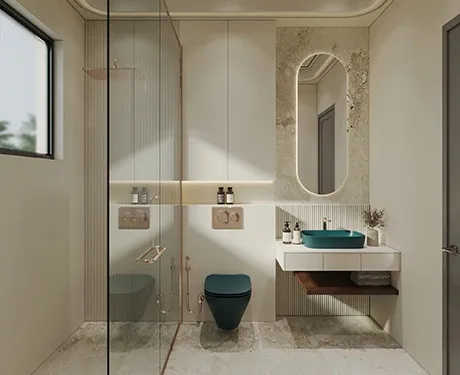
By utilizing premium home interior design services that offer integrated, in-house manufacturing, every piece of furniture is custom-engineered to match the exact proportions of your rooms. Wall-mounted floating credenzas keep floor real estate entirely clear, instantly making a lounge look larger. Swapping rigid, sharp-angled seating for soft, organic curved sofas allows family members to move smoothly around tight walkways without sacrificing seating comfort.
Furthermore, floor-to-ceiling wardrobes featuring integrated pocket doors or smooth sliding tracks completely eliminate the floor clearance space required by standard swinging doors, maximizing functionality in compact dressing zones.
Elevating Vertical Surfaces into Functional Art canvases
When floor real estate is at an absolute premium, you must look upward. Transforming empty vertical walls into highly functional, premium design features is a hallmark of high-end apartment design.
Instead of setting up traditional bookshelves or scattered storage cabinets that clutter the floor profile, consider installing full-height architectural paneling that conceals push-to-open, handleless storage bays.
Integrating open niches lined with brushed champagne gold metal, warm backlit profile LEDs, or rare stone accents allows you to display curated artwork and personal artifacts beautifully. This approach keeps your everyday household items completely hidden out of sight behind seamless, elegant timber faces that look like solid architectural walls.
Engineering a Cohesive Material and Color Palette
Introducing too many contrasting materials, busy wallpapers, or loud colors into a compact home fragments the eye's journey, causing rooms to feel chaotic and significantly smaller. True luxury is always rooted in visual restraint.
A highly successful strategy involves selecting a harmonious base of three to four primary, high-grade materials and running them continuously throughout the entire apartment. A serene base color palette of muted neutrals—such as soft taupe, warm bone-white, and deep charcoal—paired with elegant accents like Calacatta marble, rich walnut wood, and subtle metallic touches creates an uninterrupted visual flow.
When your flooring, cabinetry detailing, and wall treatments converse in the same elegant tonal language, the physical boundaries of the apartment gracefully blur, creating an atmosphere of expansive, timeless luxury.
Actionable Guidelines for Luxury Apartment Curation
- Opt for Floor-to-Ceiling Doors: Request your design team to install full-height internal doors that reach the ceiling line. This simple architectural adjustment instantly draws the eye upward, making your ceilings feel significantly higher than they are.
- Integrate Low-Profile Lighting: Replace hanging chandeliers or bulky surface fixtures in tight walkways with deep-regressed, trim-less spotlights and hidden LED coves to maintain clear, undisturbed sightlines.
- Consolidate Your Functions: Design dual-purpose zones early in the planning phase—such as integrating a hidden pull-out vanity desk inside a master wardrobe or setting up a sleek bar unit that folds flush into your main living room paneling.
Investing in Your Personal Sanctuary
Ultimately, your home should never feel like a cramped, unorganized space that requires constant rearranging to look presentable. Real residential luxury is achieved when a space values your daily comfort, mental well-being, and personal routines above rigid, mass-market constraints.
By moving away from standard contractor templates and partnering with an execution-focused turnkey firm, you safeguard your capital investment. You transform your urban property into an authentic, light-filled haven—creating a stunning luxury home that simplifies your routines, embraces your family, and beautifully reflects your personal journey for years to come.
Turn your urban floor plan into a premium living legacy.
[Connect with the interior architecture specialists at Interia today to schedule your private design consultation.]
frequently asked questions
Absolutely. Luxury is defined by the quality of execution, seamless material transitions, and intelligent spatial planning. By using hidden storage, continuous flooring, and custom-proportioned furniture, you eliminate visual clutter and open up walking paths, making the home feel spacious, refined, and grand.
Standard retail furniture is built to fixed, commercial dimensions that rarely fit the unique proportions of your rooms, leading to wasted dead corners or overcrowded spaces. Bespoke furniture from Interia is crafted to the exact millimeter, maximizing your storage capacity while keeping walkways perfectly clear and functional.
When you integrate tinted mirrors, lacquered wood panels, or satin stone finishes onto large vertical walls, they absorb and bounce natural light deep into your interior rooms. This light management eliminates dark corners and creates a beautiful illusion of depth, visually doubling the perceived size of the room.
Interia eliminates financial surprises by providing a highly detailed, line-item Bill of Quantities (BOQ) before any physical construction begins on-site. Backed by strict project management and seamless execution, this clear process completely locks in your exact investment, protecting you from sudden cost increases during production.