blog post
Kitchen Triangle 2.0: Optimizing Layouts for Indian Cooking and Entertaining
Remember when your grandmother could whip up a five-course meal in what seemed like a closet-sized kitchen? She wasn't magic (though her recipes were). She simply understood something fundamental about kitchen design that many modern homes overlook: optimizing efficiency through smart layout.
The classic kitchen work triangle: connecting your stove, sink, and refrigerator, has been the gold standard since the 1940s. But Indian cooking demands something different. We're not just reheating leftovers or tossing a salad. We're tempering spices, kneading dough, pressure-cooking dal, and often entertaining a houseful of relatives while doing it all.
So how do you create a kitchen that handles the chaos of Indian cooking while looking stunning enough for your Instagram-worthy dinner parties? Let's break it down.
Why the Traditional Triangle Falls Short for Indian Kitchens
The original work triangle was designed for Western cooking styles: simple, linear meal prep with minimal steps. Indian cooking? That's a different thing altogether.
Think about making a proper biryani. You're marinating meat at one counter, soaking rice at another, frying onions on the stove, and constantly moving between the fridge for yogurt, the pantry for spices, and the sink for endless rinsing. A simple triangle doesn't cut it when you need a dedicated spice zone, a wet grinding area, and space for your pressure cooker collection.
Many homeowners realize this only after they've moved in. The kitchen looks beautiful in photos, but becomes a battlefield during actual cooking. This is exactly why consulting with experienced professionals, such as the best interior design companies, early in the design process makes all the difference.
The Five Zones Every Indian Kitchen Needs
Instead of thinking in triangles, modern Indian kitchens need to be organized into five distinct work zones:
Prep ZoneThe Prep Zone is your command center. This needs generous counter space—at least four feet if possible—because Indian cooking involves serious prep work. Chopping vegetables for sabzi, making fresh chutneys, kneading atta—these aren't quick tasks. Position this near your sink for easy cleanup and close to storage for easy access to cutting boards, knives, and mixing bowls.
Cooking ZoneThe Cooking Zone is where the magic happens, and it needs breathing room. Indian cooking generates serious heat and steam. Your cooktop should have strong exhaust ventilation (we're talking at least 400 CFM for Indian cooking), and you need heat-resistant counters on both sides. Keep your most-used spices, oils, and cooking utensils within arm's reach here. Wall-mounted magnetic strips or pull-out spice racks work brilliantly.
Wet ZoneThe Wet Zone handles all your water-related tasks—washing vegetables, soaking lentils, and cleaning dishes. A deep, sturdy sink is non-negotiable. If space allows, a smaller secondary sink for vegetable prep is a game-changer. Position your dish rack, soap dispensers, and vegetable basket near this zone.
Storage ZoneThe Storage Zone needs careful planning because Indian kitchens stock an impressive variety of ingredients. You need separate storage strategies for dry goods (flours, rice, dals), spices (whole and ground), oils, pickles, and papad. Pull-out pantry units, labeled containers, and dedicated masala drawers keep everything organized and accessible.
Serving ZoneThe Serving Zone often gets overlooked, but it's crucial for entertaining. This is your staging area for plating food and assembling serving dishes. Position it between the cooking zone and dining area. Include storage for serving bowls, plates, and those beautiful brass thalis you only bring out for special occasions.
The New Triangle: Connectivity That Works
Now, here's where it gets interesting. Instead of one triangle, create multiple mini-triangles that connect these zones efficiently.
Your primary triangle should connect the cooktop, main prep counter, and sink—this handles 80% of your cooking workflow. Keep the total distance between these three points between 12 and 18 feet. Any larger and you're doing unnecessary cardio while cooking; any smaller and you'll feel cramped.
Your secondary triangle connects the fridge, prep zone, and pantry. This handles the gathering and initial prep stage of cooking. When you're starting a meal, you want to grab ingredients quickly without crisscrossing the entire kitchen.
The trick is ensuring these triangles don't overlap in ways that create traffic jams. If two people are cooking simultaneously (hello, weekend breakfast chaos), they should be able to work without constantly bumping into each other.
Smart Solutions for Real Indian Homes
Let's be honest, not everyone has a sprawling kitchen with unlimited space. Here's how to make the zone concept work in different layouts:
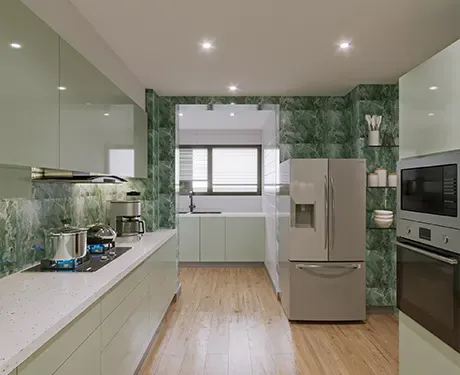
- For Galley Kitchens: Place wet and prep zones on one side, cooking and storage on the other. This creates a natural workflow without backtracking. Use vertical storage aggressively, wall-mounted racks, overhead cabinets extending to the ceiling, and magnetic knife strips.
- For L-Shaped Kitchens: Position the cooking zone at the corner, with prep on one arm and wet zone on the other. This creates a natural, efficient triangle while leaving the fourth side open for a breakfast counter or serving area.
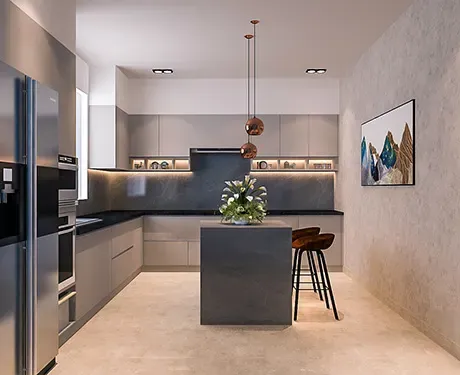
- For U-Shaped Kitchens: You've hit the jackpot for Indian cooking. Place the cooking zone at the center of one arm, with prep and wet zones flanking it on the adjacent arms. The fourth side is perfect for storage or a small dining setup.
For Open-Plan Kitchens: Create a subtle visual separation between cooking zones and entertaining areas. An island can serve double duty, prep zone on the kitchen side, serving and socializing space on the dining side. Just ensure your cooking exhaust is powerful enough that your guests aren't smelling tadka in their hair.
The Technology Integration
Modern Indian kitchens benefit enormously from smart integrations. Touchless faucets are brilliant when your hands are covered in atta or marinated chicken. Induction cooktops with precise temperature control make tempering spices foolproof. Chimneys with auto-clean features handle the oil and spice residue that comes with Indian cooking.
But here's what many people miss: adequate electrical points. You need outlets for your mixer-grinder, wet grinder, rice cooker, electric kettle, and phone charger (for those mid-cooking recipe checks). Plan for at least 8-10 dedicated points spread across your zones.
Why Professional Design Makes Sense
Look, you can absolutely plan your kitchen yourself. There are countless online tools and Pinterest boards for inspiration. But here's what happens in reality: you forget about the window placement affecting your cabinet depth, or you don't account for the plumbing access panel, or you realize too late that your beautiful kitchen island blocks the natural workflow.
The best interior design companies don't just make spaces look good; they make them work effortlessly for how you actually live. When you're working with top interior designers in Delhi, you're tapping into experience that's seen hundreds of kitchens and solved thousands of layout challenges. They know which modular brands actually last, which materials handle Indian cooking's wear and tear, and how to maximize every square inch without making the space feel cluttered.
Several interior design firms in Delhi now specialize specifically in Indian kitchen design, understanding the unique requirements of our cooking styles while incorporating modern aesthetics. They'll catch the mistakes you might not see coming and often save you money in the long run by avoiding costly do-overs.
Making Your Decision
Your kitchen will be the heart of your home for the next 10-15 years minimum. It's worth getting it right the first time. Start by cooking in your current kitchen and noting every single frustration: the countertop that's too far from the stove, the cabinet you can never reach, the corner where things disappear into oblivion.
Measure your space carefully. Take photos from multiple angles. Think about how many people typically cook simultaneously in your home. Consider your entertaining style. Do you host intimate dinner parties or big family gatherings?
Then, have a conversation with experienced designers who understand Indian cooking. Show them your notes, your measurements, your Pinterest saves. A good designer will listen more than they talk in the first meeting, asking questions about your cooking habits, storage needs, and lifestyle.
Ready to Transform Your Kitchen?
At Interia, we've designed hundreds of kitchens across Delhi that balance the demands of serious Indian cooking with the aesthetics of modern home design. We understand that your kitchen needs to handle everything from daily chai breaks to elaborate festival feasts, and we design accordingly.
Your dream kitchen, one that works as beautifully as it looks, is closer than you think. Let's create a space where cooking feels effortless and entertaining becomes a joy, not a stress test.
Get in touch with our design team today for a personalized kitchen consultation. Let's build your Kitchen Triangle 2.0 together.