blog post
Retail Interior Design: How Store Layout Influences Customer Behavior
Walk into any well-designed retail store, and something subtle happens. Movement feels natural, products seem easier to explore, and decisions become quicker. This is not accidental; it’s the result of thoughtful retail interior design. Store layout Influences how customers behave, how long they stay, and ultimately, how much they purchase. These Tips can help businesses create spaces that improve customer experiences and encourage better engagement.
For businesses aiming to create impactful retail spaces, working with experienced interior designers in Delhi NCR becomes essential. The right design approach blends psychology, functionality, and aesthetics to influence buying decisions without overwhelming the shopper.
Whether you are launching a boutique in South Delhi or a flagship showroom in Gurgaon, understanding the psychology of your floor plan is the first step toward retail mastery.
Why Store Layout Matters More Than You Think
Retail design goes far beyond placing shelves and lighting products. It’s about guiding customer journeys. Studies consistently show that layout affects how customers navigate a store, what catches their attention, and how comfortable they feel while browsing.
A cluttered or confusing layout can push customers away, while a well-planned space encourages exploration. This is where expert interior decorator services come into play—ensuring every element, from entry points to checkout counters, serves a purpose.
A strong layout answers key customer questions without words:
- Where should one go first?
- What products deserve attention?
- How easy is it to move around?
When these questions are addressed through design, customer experience improves naturally.
The Psychology Behind Retail Store Layouts
Retail interior design relies heavily on behavioral psychology. Customers don’t just shop—they respond to visual cues, spatial flow, and subtle design signals.
The Power of First Impressions
The entrance of a store sets the tone. Known as the “decompression zone,” this space allows customers to transition from the outside world into the shopping environment. A well-designed entrance ensures that shoppers don’t feel overwhelmed and can absorb the store’s offerings gradually.
Professional interior designers in Delhi NCR often design this area to be minimal yet impactful, allowing key displays to stand out just beyond the entry.
Guiding Customer Movement
Most shoppers naturally move in a particular direction when they enter a store. Smart layouts use this tendency to guide them through a curated path, ensuring maximum product exposure.
Strategic placement of aisles, focal points, and visual anchors ensures that customers don’t miss important sections. This is especially crucial in retail environments where impulse purchases play a big role.
The Role of Visual Hierarchy
Not all products should compete for attention. Effective retail spaces use visual hierarchy to highlight bestsellers, new arrivals, or premium collections.
Lighting, shelving height, and spacing are used to subtly guide attention. Experienced professionals offering interior decorator services understand how to balance these elements to avoid visual clutter.
Strategic Layout Models That Drive Conversions
Different businesses require different "temptations." The way you organize your aisles should depend entirely on what you sell and how you want your customers to feel.
The Grid Layout: Efficiency and Speed
Commonly seen in supermarkets or pharmacies, the grid layout maximizes every inch of floor space. It’s perfect for shoppers on a mission. However, it can feel cold. To bridge the gap, we often integrate elements from our home interior design services, such as warm wood accents or soft lighting, to make a functional grid feel more "boutique" and less "warehouse."
The Loop (Racetrack) Layout: Controlled Storytelling
The loop layout creates a defined path that leads customers through every single department. This is the gold standard for "experiential" retail. It forces "dwell time," ensuring that a shopper looking for a shirt also sees the shoes, the belts, and the accessories. It’s a design that prioritizes discovery over speed.
The Free-Flow Layout: Luxury and Exploration
The Invisible Tools of Influence: Lighting and Sightlines
A layout is only as good as the customer's ability to see the products. This is where the technical expertise takes the frontline.
Creating "Speed Bumps" to Increase Dwell Time
If a customer walks too fast, they don't buy. "Speed bumps" are visual breaks—like a mid-aisle display or a change in flooring—that force a person to stop. We often use specialized lighting or a unique furniture piece from our interior decorator services to create these moments of pause. The longer a customer stays, the higher the chance of a conversion.
The Impact of Vertical Merchandising
Human eyes naturally move like they are reading a book—left to right, top to bottom. By utilizing vertical space, you keep the visual interest high without cluttering the floor. High-quality home interior design services often use this trick to make small rooms feel larger, and in retail, it makes your inventory feel curated rather than "stacked."
Lighting and Color Roles in Layout Impact
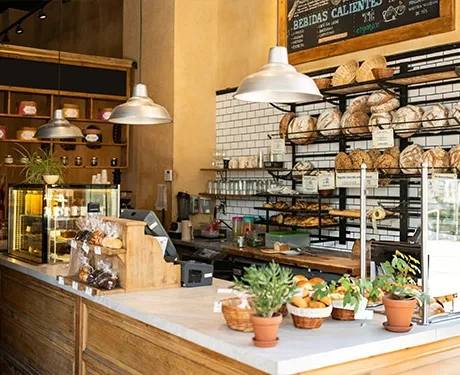
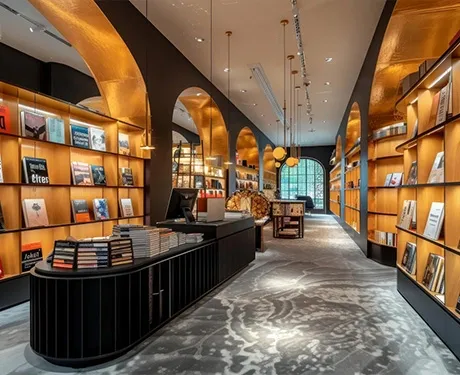
Lighting highlights focal points within layouts. Warm tones invite lingering; cool ones speed exits. Color psychology pairs with paths, blues calm in apparel zones, and reds energize near checkout.
Layered lighting follows flow: ambient for overview, accent for displays. Interia uses dynamic visuals in Delhi NCR retail designs, with colors evoking emotions tied to brand goals. These elements make layouts intuitive, turning casual browsers into buyers.
Product Placement Strategies That Drive Sales
Position high-profit items at path ends or bends. Eye-level shelves get 35% more picks than low ones. Vertical zoning uses height for variety without clutter.
Thematic clusters create stories along the journey. In Interia's Gurgaon hospitality-linked retail spaces, product zones flowed naturally, enhancing discovery. Avoid dead zones; repurpose with interactive displays to keep momentum.
Sensory Elements Enhancing Layout Effects
Beyond sight, scent and sound amplify layout power. Subtle aromas follow traffic paths; soft music slows pace in free-flow areas. Textures on fixtures invite touch.
These multisensory touches deepen immersion. Interia integrates comfort and ambiance in commercial layouts, making stores destinations. Combined, they raise satisfaction and loyalty.
Why Interia is the Definitive Choice for Your Retail Transformation
In a city that never sleeps, your retail space needs to stand out. Interia doesn't just "design" shops; we build profit-generating environments.
- Localized Expertise: Being premier interior designers in Delhi NCR, we understand the local nuances—from Vastu-friendly entrances to the specific aesthetic demands of the luxury Indian market.
- Psychology-Driven Design: We don't just follow trends. We study how your specific target demographic moves and thinks. Our designs are a blend of beauty and data.
- Holistic Solutions: Whether you need home interior design services for a private studio or a full-scale commercial renovation, our end-to-end management ensures that the "Interia touch" is visible in every corner.
- Unmatched Quality: We bridge the gap that many firms leave behind. While others focus only on the shelves, we focus on the "Pause Points"—the seating, the scent, and the tactile experience that turns a visitor into a brand advocate.
Bridging the Retail Gap: The Interia Advantage
Many top-ranking retail blogs focus solely on the "big" things like floor plans. They miss the "micro-moments." At Interia, we look at the places others lag—like the acoustics of the store or the "touch-ability" of the displays. We provide the missing content by focusing on "sensory design." A store that looks good but sounds like a cavern will never retain customers. We ensure your retail interior is a symphony of sight, sound, and comfort.
Conclusion
Your retail layout is the most powerful marketing tool you own. It is the physical manifestation of your brand’s promise. By moving away from "accidental" design and embracing strategic, psychology-based layouts, you create a space where customers don't just shop—they belong. If you are looking for the best interior designers in Delhi NCR to redefine your commercial presence, the journey starts with a layout that understands the human heart.
Transform your business today. [Click here to consult with Interia’s Expert Design Team]
Frequently Asked Questions (FAQs)
1. Why is the "Decompression Zone" so important for my store?
It acts as a mental buffer. If you crowd this area, customers feel overwhelmed and "pushed." Giving them space to breathe as they enter makes them stay in the store longer.
2. How do interior decorator services help in increasing sales?
Decorators focus on the "vibe"—the textures, colors, and furniture. These elements trigger emotional responses. A customer who feels comfortable is statistically more likely to make an impulsive purchase.
3. Can I use home interior design services for a small boutique?
Yes! "Resi-mmercial" design is a huge trend. Using residential elements like plush rugs or soft armchairs in a retail setting makes the environment feel more exclusive and high-end.
4. What is the most common mistake in retail interior design?
Poor lighting. Even the best layout will fail if the products look dull. You need a mix of ambient, task, and accent lighting to create depth and highlight your best-sellers.
5. How do I find the best interior designers in Delhi NCR for my project?
Look for a firm that offers a portfolio of both commercial and residential work. This versatility, like what we offer at Interia, ensures a balance of functional efficiency and aesthetic warmth.