blog post
What Does a ₹1 Crore Interior Design Project Really Include? A Complete Breakdown
When you allocate an eight-figure budget to a home interior project, you are no longer paying for individual items like an upgraded wardrobe, a standard kitchen layout, or modern wall treatments. In the premium residential markets of the Delhi National Capital Region (NCR), a budget of ₹1 Crore really represents a shift from consumer-grade styling to full architectural personalization.
Yet, for many homeowners stepping into this tier of spending, the initial question is often a practical one: Where does the money actually go?
When you work with a leading interior design firm in India, a ₹1 Crore budget is treated as an engineering and procurement plan. It is typically applied to premium high-rise apartments ranging from 2,500 to 4,000 square feet—such as those found along Gurgaon's Golf Course Extension Road—or independent villa floors in South Delhi. At this scale, the final cost reflects an investment in custom manufacturing, integrated automation, climate-engineered structures, and rare material sourcing.
To bring transparency to high-end residential spending, here is a functional breakdown of how a ₹1 Crore interior budget is allocated by the industry's top professionals.
The Macro Allocation: The Four Core Quarters of the Budget
A common misconception is that a luxury budget is spent mostly on superficial decorations like designer accent chairs, imported wallpaper, and hanging crystal light fixtures. In practice, a premier interior company in Gurgaon divides the capital across four distinct engineering and design quarters to ensure the home functions as beautifully as it looks.
1. Structural Engineering and Mechanical Infrastructure (20% – 25%)
True luxury remains completely hidden behind the finished walls. This quarter of the budget covers the structural alterations that retail interior decorators rarely touch. It includes modifying masonry layouts to optimize room flow, installing acoustic insulation inside drywalls to block sound, and routing heavy-duty plumbing to manage high-pressure water systems. It also includes zoning the entire home with centralized VRV (Variable Refrigerant Volume) air conditioning systems, ensuring air flows evenly and silently through architectural ceiling slots rather than relying on visible wall units.
2. Bespoke Millwork and Integrated Architectural Panelling (35% – 40%)
The largest portion of the budget is consistently dedicated to custom woodwork. This does not involve buying modular, mass-produced cabinet carcasses from a catalog. Instead, it covers full-height wall panelling, custom hidden doors that sit flush with the architecture, walk-in closets equipped with automated internal lighting, and specialized kitchen setups built with premium composite materials like quartz or porcelain slabs.
3. Loose Furniture Curation and Artisanal Fabrication (20% – 25%)
This area covers the main touchpoints of daily life. Rather than purchasing standard retail luxury items that can be found in multiple homes across NCR, a high-end studio custom-builds your primary furniture. This includes eleven-foot dining tables cut from single slabs of seasoned hardwood, sofas upholstered in heavy-weight natural fibers like Belgian linen, and custom metal accent structures engineered specifically for the room's proportions.
4. Smart Home Automation and Architectural Lighting Design (15% – 20%)
A premium home requires sophisticated mood management. This part of the budget covers a full home automation backend that links lighting scenes, motorized window blinds, and climate controls to a single, intuitive interface. It also includes low-glare, architectural track lighting systems that focus light exactly where it is needed without creating harsh glare across the floors.
Room-by-Room Financial Realities: Where the Capital is Spent
To understand how this distribution works in practice, it helps to look at the budget through a room-by-room breakdown. The spending is intentionally weighted toward the primary living spaces and high-utility zones.
The Formal Living and Dining Zone (₹25 Lakh – ₹35 Lakh)
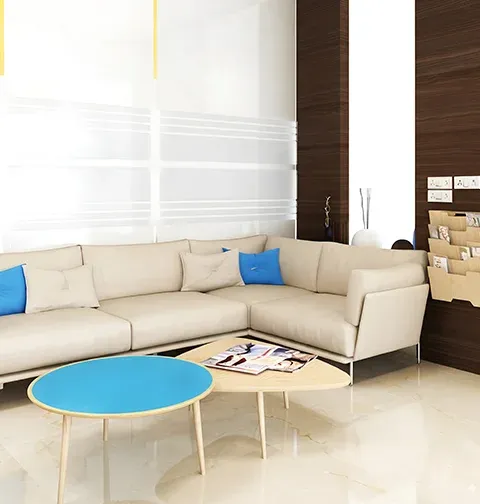
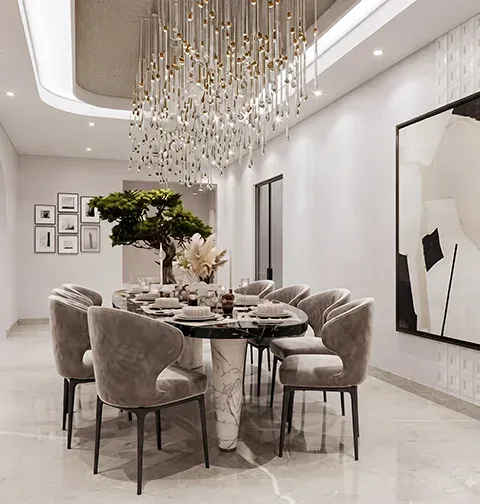
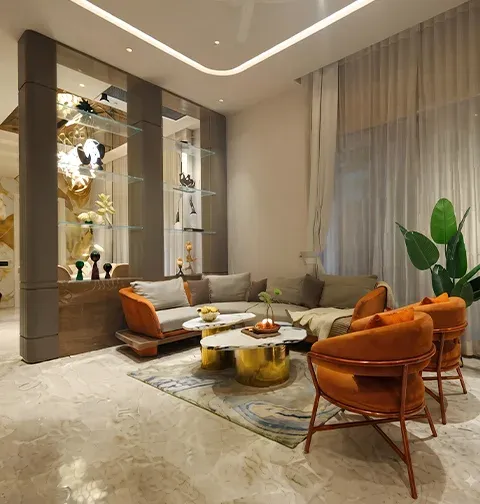
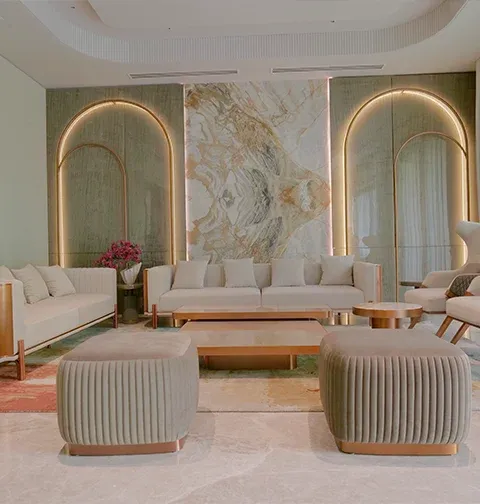
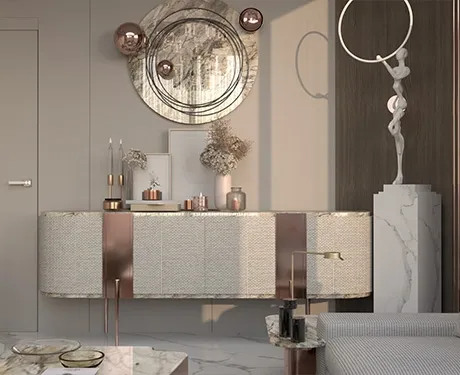
As the central gathering space of the home, this area demands the highest material investment. The budget here is spent on extensive wall panelling using rare book-matched wood veneers, customized stone flooring treatments, and large-scale architectural light installations. The furniture is completely bespoke, designed to match the exact scale of the room's ceilings, and includes heavy lounge seating, statement credenzas, and integrated metal trims.
The Professional Culinary Hub (₹15 Lakh – ₹22 Lakh)
A premium kitchen must balance heavy, daily Indian cooking with a clean, high-end look. A budget in this tier covers an advanced modular setup built with high-pressure, moisture-resistant substrates like HDHMR (High-Density High-Moisture Resistance) boards or solid wood frameworks. The external surfaces are finished with seamless polyurethane (PU) lacquers or anti-fingerprint surfaces. It includes German-engineered soft-close hardware, hidden storage pull-outs that operate smoothly under heavy loads, and integrated appliances like built-in refrigerators, wine coolers, and silent chimneys.
The Master Bedroom and Private Suite (₹15 Lakh – ₹20 Lakh)
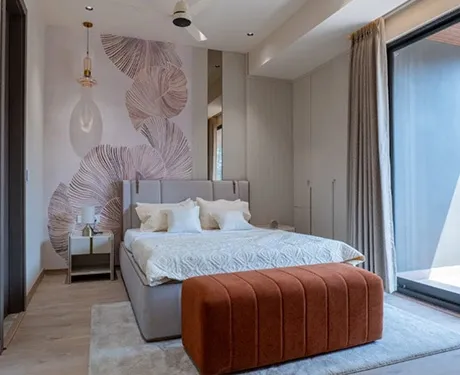
The master suite is designed as a private sanctuary. The investment focuses heavily on a custom walk-in closet featuring floor-to-ceiling glass doors, specialized leather-lined drawers, and automated wardrobe lighting. The bedroom itself features bespoke headboards integrated with the wall architecture, custom side tables, and sophisticated automation panels that let you control the entire room's environment directly from your bedside.
Primary Guest and Family Bedrooms (₹10 Lakh – ₹15 Lakh per room)
While these rooms use slightly fewer custom details than the master suite, they maintain the same structural quality. The budget covers full-height wardrobes with custom sliding hardware, dedicated study or lounging alcoves, and tailored false ceilings designed to conceal automated curtain tracks and air conditioning ducts.
The Hidden Value Matrix: What Separates a ₹1 Crore Project
When exploring options with the best interior design company in India, it becomes clear that the real value of an eight-figure budget lies in the specialized fabrication methods and material treatments that protect your investment over time.
| Investment Layer | Standard Luxury Project | Interia-Grade Absolute Luxury |
| Carpentry Base | Standard commercial plywood sourced from open markets | 100% seasoned, kiln-dried timber frames that resist warping |
| Surface Finish | Manual brush painting or basic retail laminates | Multilayered, atomized PU spray coats applied in a dust-free plant |
| Hardware Integration | Standard soft-close hinges mounted on-site | Meticulously milled, hidden European hardware lines |
| Material Performance | Raw stones and untreated fabrics susceptible to stains | Pre-sealed natural quartzites and UV-tested, rub-rated textiles |
A major challenge for high-end homes in North India is the extreme weather variation. The intense summer heat gives way to heavy monsoon humidity, causing standard wood installations to expand, contract, warp, or crack within a couple of seasons.
To prevent this structural damage, top firms use advanced material engineering. At Interia, every piece of timber used in custom paneling and loose furniture undergoes a rigorous kiln-drying and climate-seasoning process inside their private manufacturing plant. This environmental conditioning ensures the wood adapts perfectly to the local climate, keeping joints tight and doors straight for decades.
The Peace of Mind in Turnkey Execution
Ultimately, a ₹1 Crore interior investment is an investment in your lifestyle and your time. Managing a project of this scale independently requires coordinating dozens of separate trade vendors, tracking fragile global material shipments, and supervising delicate technical installations on-site.
The leading luxury interior designers in Delhi eliminate this stress by working under a full, white-glove turnkey model. When you partner with an integrated firm, you gain a single point of accountability.
Because companies like Interia handle both the creative architectural drawings and the physical manufacturing within their own smart facility, they eliminate the communication gaps, budget overruns, and unexpected delays that usually happen when a designer outsources work to unverified third-party workshops. Every single joint, surface finish, and electrical line goes through over 300 strict internal quality checks before the home is handed over, ensuring your capital investment translates into an authentic, enduring home built to last for generations.
[Ready to transform your premium property into a timeless legacy home? Connect with the senior space planning and procurement specialists at Interia today to schedule your private design consultation.]
frequently asked questions
Yes. In a professional turnkey project at this budget level, essential civil modifications—such as shifting non-load-bearing walls, re-routing plumbing lines, and updating bathroom floor substrates—are fully covered within the overall budget strategy to optimize space efficiency.
While imported furniture looks beautiful in catalogs, it is manufactured for a completely different climate and standard room proportion. In-house custom fabrication allows designers to build furniture specifically proportioned to your home's ceiling heights. It also ensures the wood is properly seasoned to withstand the extreme climate shifts of Delhi NCR without cracking.
A comprehensive, ultra-luxury project ranging from ₹1 Crore and above generally requires six to eight months for design development, custom manufacturing, and on-site assembly. This timeline ensures all custom plaster work, wood seasoning, and automated testing are completed without rushing the quality.
Never look at the total bottom-line number alone. Examine the detailed Bill of Quantities (BOQ) to check the exact core materials being used (such as marine-grade plywood versus commercial ply), the specific brands of concealed hardware, the thickness of stone veneers, and whether the quote includes full installation, transport, and a long-term after-sales warranty.