blog post
Looking Beyond Planters: Transforming Your NCR Balcony into a Vertical Green Retreat
When was the last time you really took a moment to looking at your balcony? For most NCR residents, these outdoor spaces become storage areas for forgotten furniture or washing lines. But here's something interesting: India's urban population of around 534.9 million people is increasingly transforming balconies with creative gardening solutions, putting them at the forefront of this green revolution..
Your balcony doesn't need rows of terracotta pots to become a sanctuary. What it needs is imagination, smart ideas, vertical thinking, and maybe a nudge from a professional interior designer who understands how urban spaces in Delhi can transcend their limitations.
Why Vertical Gardening is Perfect for NCR Balconies
Let's be honest. NCR apartments aren't known for sprawling outdoor spaces. The average balcony ranges between 30 and 80 square feet, which traditional gardening would quickly overwhelm. But vertical gardening flips this constraint on its head.
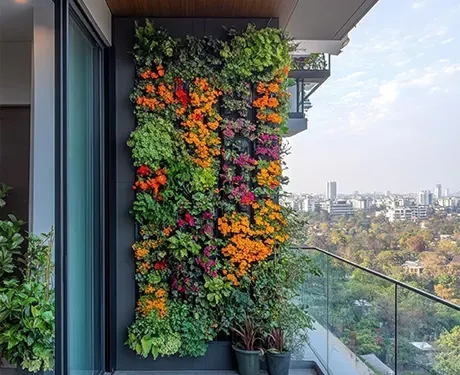
Think of your balcony walls as blank canvases. Living walls and trellises allow plants to grow upward on vertically suspended panels, often with built-in irrigation systems, which means you're utilizing space that would otherwise remain empty. This approach is particularly relevant for NCR residents dealing with dust, pollution, and limited square footage.
Commercial interior design firms working on residential projects have caught onto this trend. They're incorporating vertical gardens not just as decorative elements but as functional air purifiers that combat Delhi's notorious air quality issues. When designed correctly, these green walls can reduce indoor temperatures by several degrees, a blessing during NCR's sweltering summers.
What Makes a Balcony Garden Vertical (And Why It Matters)
Here's where most people get stuck. They imagine complicated installations requiring structural changes. The reality? Vertical gardening can be as simple as wall-mounted planters or as sophisticated as modular living wall systems.
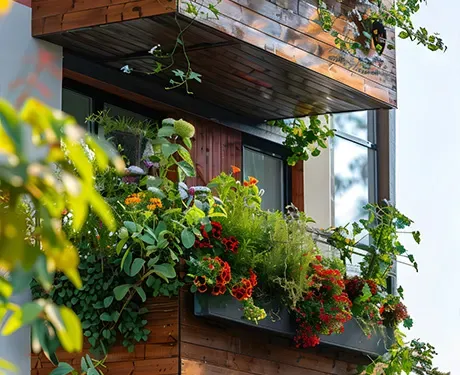
The magic lies in layering. Picture this: climbing plants on trellises forming your backdrop, medium-height plants in tiered shelving at eye level, and trailing plants in hanging baskets creating depth. You've just created three distinct growing zones without sacrificing floor space for that morning chai.
Younger consumers, particularly Generation Z and millennials, are increasingly drawn to vertical gardening solutions that fit their tech-savvy lifestyles in limited urban spaces. This demographic shift explains why commercial interior designers in Delhi are being asked to integrate smart irrigation systems and app-controlled growing environments into balcony designs.
The Real Benefits Nobody Talks About
Sure, everyone mentions aesthetics. But vertical gardens deliver advantages that traditional planters can't match.
First, there's the air quality factor. NCR's AQI regularly hits unhealthy levels, and while your balcony garden won't solve Delhi's pollution crisis, strategically chosen plants can filter particulate matter. Pothos, spider plants, and ferns excel at this, especially when arranged vertically to maximize leaf surface area exposed to air.
Second, vertical arrangements create microclimates. The layered structure provides shade for delicate plants while sun-loving varieties occupy prime real estate. This means you can grow a wider variety than floor-space gardening would permit.
Third, and this one surprises people: vertical gardens are easier to maintain. No bending over, no back pain, and better pest control since plants aren't touching the ground where insects thrive. For busy NCR professionals, this accessibility factor is huge.
Designing Your Vertical Garden: What Actually Works in NCR
Now we get practical. NCR's climate is extreme. We're talking 45-degree summers and near-freezing winters, with monsoons that test every outdoor installation.
Your vertical garden needs to respect these realities. Start with structure. Professional interior designers recommend powder-coated metal frames or treated wood that can withstand moisture and heat. Avoid anything that will rust, warp, or require constant replacement. Plant selection matters enormously. For NCR specifically, consider these layers:
- Top layer (high light, high heat): Succulents like jade plants, portulaca, or desert roses. They laugh at Delhi summers and need minimal water.
- Middle layer (moderate conditions): Herbs like basil, mint, and curry leaves. They're productive, fragrant, and well-suited to the region.
- Lower layer (partial shade, higher moisture): Ferns, coleus, and impatiens. These benefit from the shade cast by upper plants.
The irrigation question trips up most DIY attempts. Living walls with climbing plants like jasmine and clematis make for lush backdrops in small gardens or balconies, but they need consistent moisture. Consider drip irrigation systems with timers. They're inexpensive, easy to install, and eliminate the daily watering hassle that kills most balcony garden enthusiasm.
Beyond Plants: Creating a Retreat, Not Just a Garden
Here's where commercial interior design firms earn their keep. They understand that a vertical garden shouldn't just exist; it should integrate with how you use the space.
Lighting transforms everything. String lights woven through foliage create an evening ambiance. Uplights at the base of vertical structures add drama. For NCR's long power-cut evenings, solar lighting offers a seamless blend of elegance and practicality.
Seating matters too. A small bench or weather-resistant cushions turn your garden into a retreat rather than something you look at from inside. The key is proportion. In a compact NCR balcony, furniture should be minimal but intentional.
Material choices separate amateur efforts from professional results. Natural stone tiles provide a cooling contrast to greenery. Bamboo screens offer privacy while maintaining airflow. These elements, when chosen by experienced commercial interior designers in Delhi, create cohesion between your indoor and outdoor spaces.
Common Mistakes to Avoid
Most failed balcony gardens share predictable patterns. Overplanting ranks first. That cute nursery visit where you bought twenty varieties? They'll compete for light and nutrients, and most will die. Start with half the plants you think you need.
Ignoring weight limits is dangerous. Vertical gardens, especially when watered, get heavy. NCR's older apartments may have load restrictions. A professional interior designer will calculate this during planning, potentially saving you from structural damage.
Forgetting maintenance access dooms otherwise good designs. If you can't reach plants for pruning or troubleshooting, they'll gradually deteriorate. Build in accessibility from day one.
Taking the First Step
You don't need to transform your entire balcony overnight. Start with one wall. Install a simple trellis and plant money plants or flowering vines. Add a few hanging baskets. Live with this for a month and observe how sunlight moves, where water pools, and which areas stay cool.
This observation phase is what professional interior designers do during site analysis, but you can do it yourself. Document what you learn. Then expand deliberately.
For larger transformations, consulting commercial interior design firms makes sense. They bring expertise in materials, spatial planning, and plant selection specific to NCR's unique challenges. More importantly, they see possibilities you might miss and avoid pitfalls you wouldn't anticipate.
The Future of NCR Balconies
As urban spaces become more compact, vertical gardening is on the rise as an innovative solution for maximizing limited space. For NCR, this isn't just a design trend; it's an adaptation to increasingly crowded urban living.
Expect to see more buildings designed with vertical gardening infrastructure built in. Irrigation systems pre-installed, structural support for green walls, and balconies oriented to optimize plant growth. Forward-thinking developers are already incorporating these features.
Your balcony represents opportunity. Not just for plants, but for rethinking how outdoor spaces function in urban NCR. Beyond planters lies a different relationship with your home, where nature isn't something you visit but something you live with daily.
The question isn't whether your balcony can become a vertical green retreat. It's whether you're ready to see it as more than a storage space gathering dust and forgotten dreams. Because once you start thinking vertically, those few square feet transform into something remarkable.
Transform Your Balcony Today with Interia
Ready to turn your NCR balcony from wasted space into a thriving vertical retreat? At Interia, our team of professional interior designers specializes in creating functional, beautiful outdoor spaces that work with Delhi's unique climate challenges.
As one of the leading commercial interior design firms in the NCR region, we understand that every balcony has potential. Whether you're working with a compact 40-square-foot space or a generous terrace, our commercial interior designers in Delhi will craft a vertical garden solution that matches your lifestyle, maintenance capacity, and aesthetic vision.
Don't let another season pass with your balcony serving as a storage area. Contact Interia today for a consultation, and let's explore how vertical gardening can transform not just your outdoor space, but your entire experience of home in the NCR.
Get in touch with Interia and discover what's possible when design expertise meets green innovation.