blog post
Top 10 Architectural Styles That Influence Modern Interior Design
Ever enter a room and feel the indisputable presence of character, a certain classic beauty that could not be considered a product of the times? You are probably getting the hint of the not-so-subtle, but far-reaching effect of traditional architectural forms on its interior design. Although we are in a time and age of modern aesthetics, the reverberations of the past building movements still serve to inspire, inform, and enrich what we call top modern designs in our lives.
As Interia, one of the most acknowledged brands in the sphere of advanced interior design, we know that the ultimate design genius lies not only in choosing the currently popular styles. It is more like a profound sense of gratitude to the origins of design – how the past architectural structures have influenced our understanding of space, light, and form. In our case, the interior design process is usually a dialogue with the current house architecture design, admiring its past but adding to it a new functional and stylish present.
Architectural styles play a major role in shaping the look and feel of today’s interiors. So come along with us on an exciting tour of discovery of ten key architectural styles that up until now have had a strong impact on modern interior design and that affect everything ranging furniture selection to the general spatial arrangement.
Explore 10 Popular House Architecture Design Styles by Experts
1. Classical (Greek & Roman Revival): The Origins of grandeur
Imagine grand pillars, balanced designs, and a feel of persisting order. Based on ancient Greece and Rome, classical architecture stressed harmony, proportion, and balance.
- Impact on Interiors: This style introduced the idea of the grand entrance, formal living rooms, and the usage of such luxurious materials as marble. In even the most modern of house architecture design styles, you can find echoes of this in symmetrical furniture layouts, the adoption of elaborate mouldings, and a taste for classic, well proportioned luxury furniture. Imagine clean lines, however, with a feeling of stately-ness.
2. Gothic Revival: Drama, Height, and Complexity
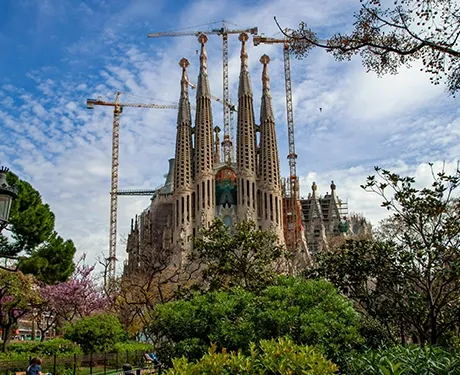
Gothic Revival architectural designs started in the mid-18th century as a romantic reaction to the constraints of Classicism, and were inspired by medieval cathedrals.
- Impact on Interiors: Although not as explicitly evident in the modern minimal interior, the effects of Gothic can be identified in the verticality (high ceilings, tall windows), elaborate detailing, and theatrics of light. Such details as arched door frames or windows, a certain respect to craftsmanship can be noticed in eclectic or transitional modern styles, though they are rather hidden. This interior style can be meticulously understood through the work of Gaudí, who designed the famous Sagrada Familia in Barcelona. Today, this is a UNESCO World Heritage site as well.
3. Renaissance: Order, Humanism, and Artistic Bloom
The Renaissance was born in Italy as a rebirth of classical ideals with a fresh dash of humanism and artistic expression, and the house architecture design of this era exuded a distinct level of art and passion.
- Impact on Interiors: The Renaissance promoted the ideals of space, rational plan, and emphasis on art and craft. Its impact on current interiors lies in the value placed on integrated art, built-in bookshelves, and a sense that the space should be both magnificent and welcoming. Here, the concept of the living room as a place of intellectual and artistic activity around the fireplace can be traced.
4. Baroque & Rococo: Luxury, Passion and Frivolity
These are the styles of the 17th and 18th centuries concerned with drama, abundant ornamentation, and the feeling of movement. Baroque was massive and majestic, whereas Rococo was airy, playful, and asymmetrical.
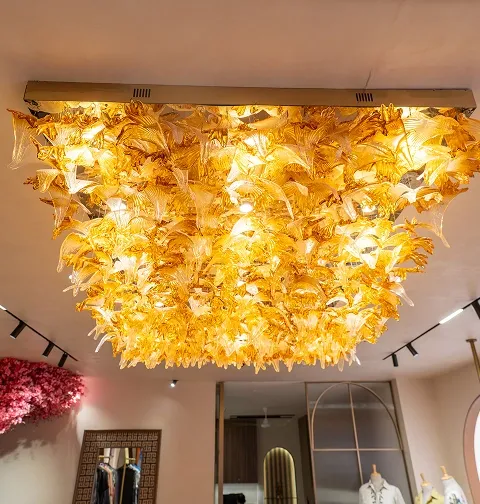
- Impact on Interiors: Although the full-scale Baroque or Rococo is unlikely to appear in a modern house architecture design, its essence is preserved in the luxury furniture items, decorative mirrors, and lighting pieces (go for chandeliers), as well as an adventurous approach to sumptuous materials and bright colours. They remind us that interiors can be joyful and expressive.
5. Neoclassical: Back to Controlled Elegance
Neoclassical design (late 18th century) was a reaction to the excesses of Baroque and Rococo and advocated a return to the purity and restraint of classical forms.
- Impact on Interiors: The style is one of the strongest influences on contemporary interiors. It made muted palettes, graceful shapes, spindly furniture legs, and an emphasis on sophisticated simplicity popular. The simplicity of lines and the minimalistic house architecture design style that is a hallmark of Neoclassical design have seen many of its descendants in various pieces of modern luxury furniture.
6. Arts and Crafts Movement: Beauty and Honesty of Handcraft
The Arts and Crafts movement, which emerged in the late 19th century, opposed industrial mass production in favor of hand-made quality, natural materials, and simpler forms.
- Impact on Interiors: This style preferred natural wood finishes, structural exposure, built-ins, and craftsman textiles. Its influence can be felt in the current popularity of rustic modern, industrial chic, and even Scandinavian design, which all hail the virtues of natural materials, straightforward construction, and minimalist decoration. The element of coziness and comfort is essential.
7. Art Deco: Glamour, Geometry, and the Machine Age
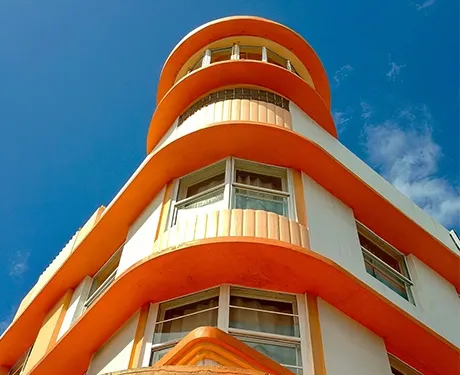
The ultimate in glamour of the 1920s and 30s, Art Deco embraced geometric design, streamlined shapes, sumptuous fabrics, and a feeling of modernity and luxury.
- Impact on Interiors: The Art Deco period is felt by applying dramatic geometric motifs, reflective finishes (mirrors, polished chrome), deep jewel colors, and highly stylized modern furniture.
8. Modernism and Bauhaus: Form Follows Function
A radical focus on functionality, minimalism, and industrial materials eventually revolutionized design through the Bauhaus school (Germany) of the early 20th century and the larger Modernist movement.
- Impact on Interiors: This is possibly the closest relative to the modern interior decoration. It brought us open-plan living, bare structural framework, a breach with ornamentation, and the emergence of really modern furniture, the furniture created not to be elaborately decorated but to serve its purpose, efficiency, and comfort. Direct descendants of this movement include clean lines, neutral palettes, and an emphasis on the flow of space.
9. Mid-Century Modern: Accessible and Organic Shapes and Lines
Mid-Century Modern was a post-WWII movement (roughly 1945-1969) that emphasized organic shapes, new materials (plywood, plastic), and a passion to provide good design to the masses.
- Impact on Interiors: The style is enormously popular in the modern day. It is characterized by iconic and sculptural modern furniture, combination with nature (big windows), open space planning, and a playful approach to color and texture. It is also highly comfortable, practical, and has a classical aesthetic, which is why it is present in a lot of modern households.
10. Brutalism: Unrefined Materials and Strength of Forms
Brutalism, which hails raw concrete, uncovered structure and apparatus, and huge, overbearing shapes, emerged in the mid-20th century. It was offensive yet unapologetic.
- Impact on Interiors: A complete Brutalist interior may be too harsh to most tastes but its impact can be seen in the popularity of raw and unrefined materials such as exposed concrete walls, unpolished wood and industrial metals. It advocates a daring, minimalistic style, popular in downtown lofts or architectural houses where the structure is rejoiced instead of being concealed. It is more like letting materials do the talking.
Interia: Melding Tradition with Modern Perspective
These historical tapestries are a major source of inspiration in our interior design at Interia. When we look at a new project, we do not merely look at a space, we look at the potential of that space to speak a story, to relate with its architectural heritage, yet conform to the requirements of contemporary lifestyle.
Whether we are talking about a minimalistic urban apartment, which winks at the principles of Bauhaus, or a large family house, where classical symmetry is slightly altered, our strength is in the interiors, which are aesthetically breathtaking and deeply practical. We know that the appropriate luxury furniture and the most impeccably selected modern furniture items can balance historical admiration and modern convenience. We appreciate the current house architecture design, but make sure that the space answers your personality and way of life.